
Imagine putting on a pair of lightweight glasses and suddenly seeing step-by-step instructions floating in front of you while you learn to operate complex machinery. No manual. No hovering instructor. Just intuitive, real-time guidance that adapts to your pace.
This isn't science fiction anymore. It's happening right now in warehouses, hospitals, manufacturing plants, and corporate offices around the world. Augmented reality (AR) is quietly revolutionizing how we learn new skills at work—and the results are genuinely surprising.
---
Before we dive deeper, let's clear up a common confusion. Augmented reality isn't the same as virtual reality (VR). While VR completely immerses you in a digital world, AR overlays digital information onto your real-world environment. Think of it as adding a helpful layer of information on top of what you're already seeing.
You've probably already used AR without realizing it. Those Instagram filters that add puppy ears to your face? That's AR. The IKEA app that lets you see how a couch would look in your living room? Also AR. Pokémon GO? Definitely AR.
Now, forward-thinking companies are taking this same technology and using it to train employees faster, safer, and more effectively than traditional methods ever could.
Here's the thing that makes this genuinely exciting: We're not talking about marginal improvements. We're talking about companies reporting 40% faster training times, 90% reduction in errors, and employees who actually enjoy learning new skills.
---
Let's be honest about something. Traditional workplace training often feels like a necessary evil. You sit through hours of presentations, watch outdated videos, read dense manuals, and then hope you remember everything when it actually matters.
The statistics paint a concerning picture:
The fundamental issue? There's a massive gap between learning something in theory and applying it in practice. Reading about how to perform a procedure is entirely different from actually doing it.
This is where augmented reality enters the conversation—not as a flashy tech gimmick, but as a practical solution to a real problem.
---
Let's walk through what AR-based training looks like in practice across different industries.
Medical professionals face a unique challenge. They need extensive hands-on practice, but practicing on real patients carries serious risks. AR is bridging this gap in remarkable ways.
At institutions like Cleveland Clinic and Johns Hopkins, medical students and residents use AR to practice complex procedures. They can see a patient's anatomy overlaid with digital information showing exactly where to make incisions, what structures to avoid, and how to proceed step-by-step.
AccuVein, an AR device used in hospitals, projects a map of a patient's veins onto their skin, helping nurses find veins on the first attempt. Studies show it increases successful first-stick rates by 3.5 times. For patients who've experienced the frustration of multiple needle sticks, this isn't just a technological advancement—it's a genuine quality-of-life improvement.
Boeing has been using AR in their manufacturing process since the early 2010s, and the results speak volumes. Technicians who wire complex aircraft systems using AR guidance complete their work 25% faster with 90% improved quality compared to those using traditional methods.
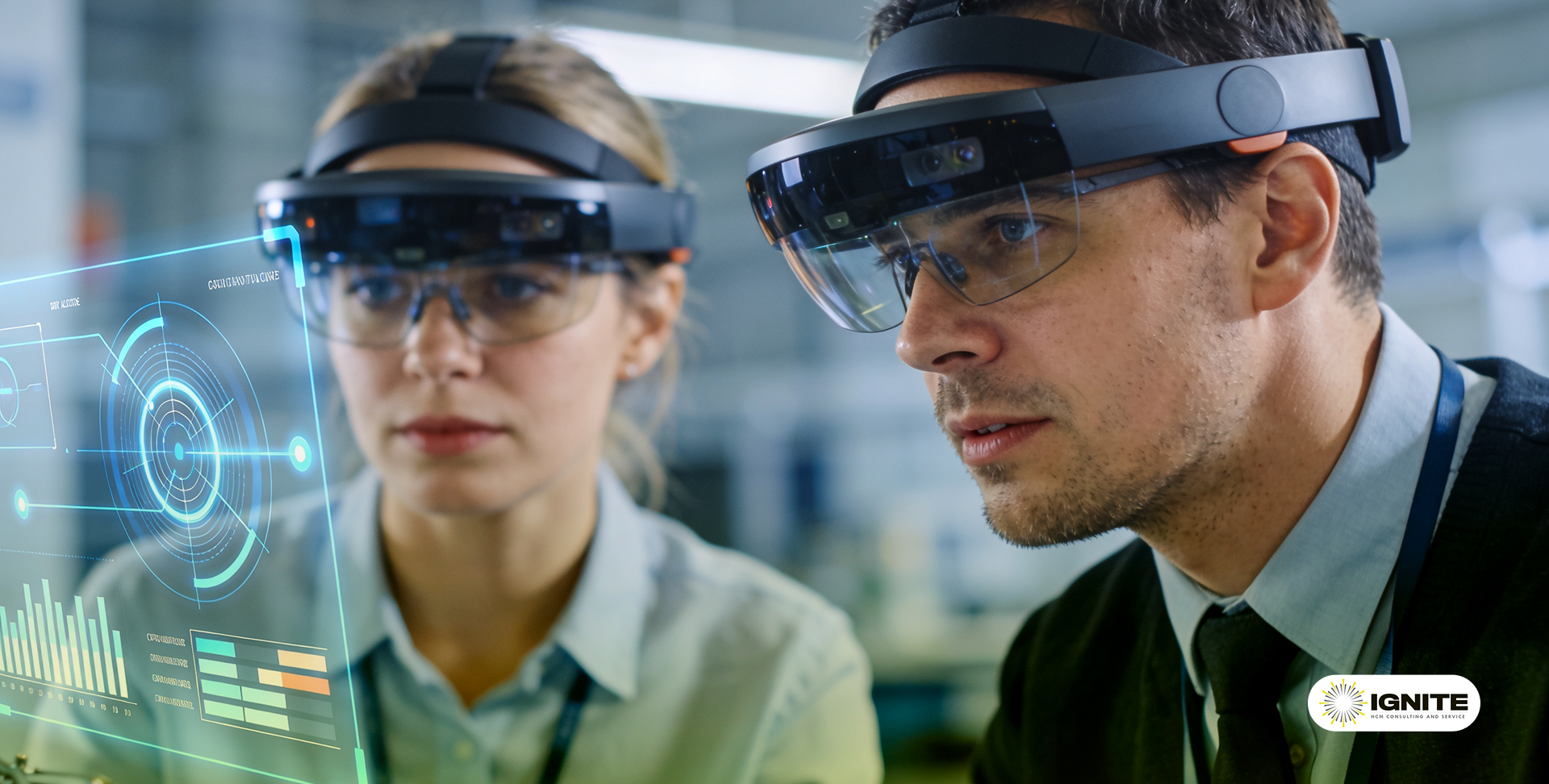
Workers wear AR headsets that display wiring diagrams directly in their field of vision. Instead of constantly looking back and forth between a manual and the actual equipment, they see instructions seamlessly integrated into their workspace.
Porsche has implemented similar technology in their service centers. Technicians connect with remote experts who can see what they're seeing and draw annotations directly in their field of view. What used to require flying in a specialist can now be resolved in minutes.
DHL conducted an extensive pilot program using AR glasses in their warehouses. The result? A 25% increase in picking efficiency. Workers could see exactly where items were located and the most efficient route to retrieve them, all displayed in their line of sight.
Walmart has invested heavily in AR for employee training, particularly for their distribution centers. New employees learn complex sorting and inventory management systems through AR-guided experiences that dramatically reduce onboarding time.
---
The effectiveness of AR training isn't accidental. It aligns with well-established principles of how humans actually learn best.
Educational research consistently shows that active learning outperforms passive learning. The cone of learning model, often attributed to Edgar Dale, suggests we remember approximately:
AR puts employees directly into "doing" mode from the start. Instead of reading about a procedure and then trying to apply it later, they practice it immediately with real-time feedback.
Here's a concept worth understanding: cognitive load. It refers to the amount of mental effort required to process information. When cognitive load gets too high, learning suffers.
Traditional training often overwhelms learners. They must absorb new information, remember it, translate it to practical application, and execute—all while potentially feeling nervous about making mistakes.
AR reduces cognitive load by presenting information exactly when and where it's needed. You don't have to remember the next step because it's displayed right in front of you. This frees up mental resources for understanding why you're doing something, not just what to do next.
There's also a psychological component that shouldn't be overlooked. Learning something new is inherently vulnerable. Nobody wants to look incompetent, especially in front of colleagues or supervisors.
AR allows for a kind of supported independence. Employees can practice and make mistakes without an audience. They can go at their own pace without feeling rushed. This psychological safety often leads to faster skill acquisition and greater willingness to take on challenging tasks.
---
Skepticism about new technology is healthy. So let's look at verified outcomes from companies that have implemented AR training.
PwC conducted a comprehensive study comparing VR/AR training to classroom and e-learning methods. Key findings included:
Honeywell reported that AR-assisted training for industrial workers reduced training time by 50% while improving information retention significantly.
Jaguar Land Rover implemented AR training for technicians and saw a 40% reduction in training time for complex procedures.
These aren't small improvements. They represent fundamental shifts in how quickly and effectively organizations can develop skilled workers.
---
If you're evaluating whether AR training makes sense for your organization or role, consider this REAL Framework:
R – Risk Assessment
How risky or costly are mistakes in your training context? High-risk environments (healthcare, aviation, heavy machinery) benefit enormously from AR's ability to provide practice without real-world consequences.
E – Environmental Complexity
How complex is the physical environment where skills will be applied? The more complex the environment, the more valuable it is to overlay instructional information directly onto that environment.
A – Availability of Expertise
Is expert knowledge readily available, or do your specialists have limited time? AR can capture and distribute expert knowledge efficiently, essentially "cloning" your best trainers.
L – Longevity of Skill Requirements
Will these skills be needed long-term? The initial investment in AR training content makes more sense for skills that will remain relevant for years.
---
No technology is perfect, and AR training has genuine limitations worth acknowledging.
Quality AR hardware isn't cheap. Enterprise-grade AR headsets like Microsoft HoloLens range from $3,500 to $5,000 per device. Content development requires specialized skills and can be expensive to produce well.
However, costs are decreasing rapidly, and many organizations find the return on investment compelling when they factor in reduced training time, fewer errors, and improved safety.
AR training works best for procedural, hands-on skills. It's less suited for soft skills like leadership development, conflict resolution, or creative thinking. The technology is a tool, not a complete training solution.
Some employees are more comfortable with new technology than others. Organizations need to plan for this reality and provide support for workers who may find AR initially intimidating.
Extended use of AR headsets can cause eye strain or discomfort for some users. Hardware continues to improve, but this remains a consideration for lengthy training sessions.
---
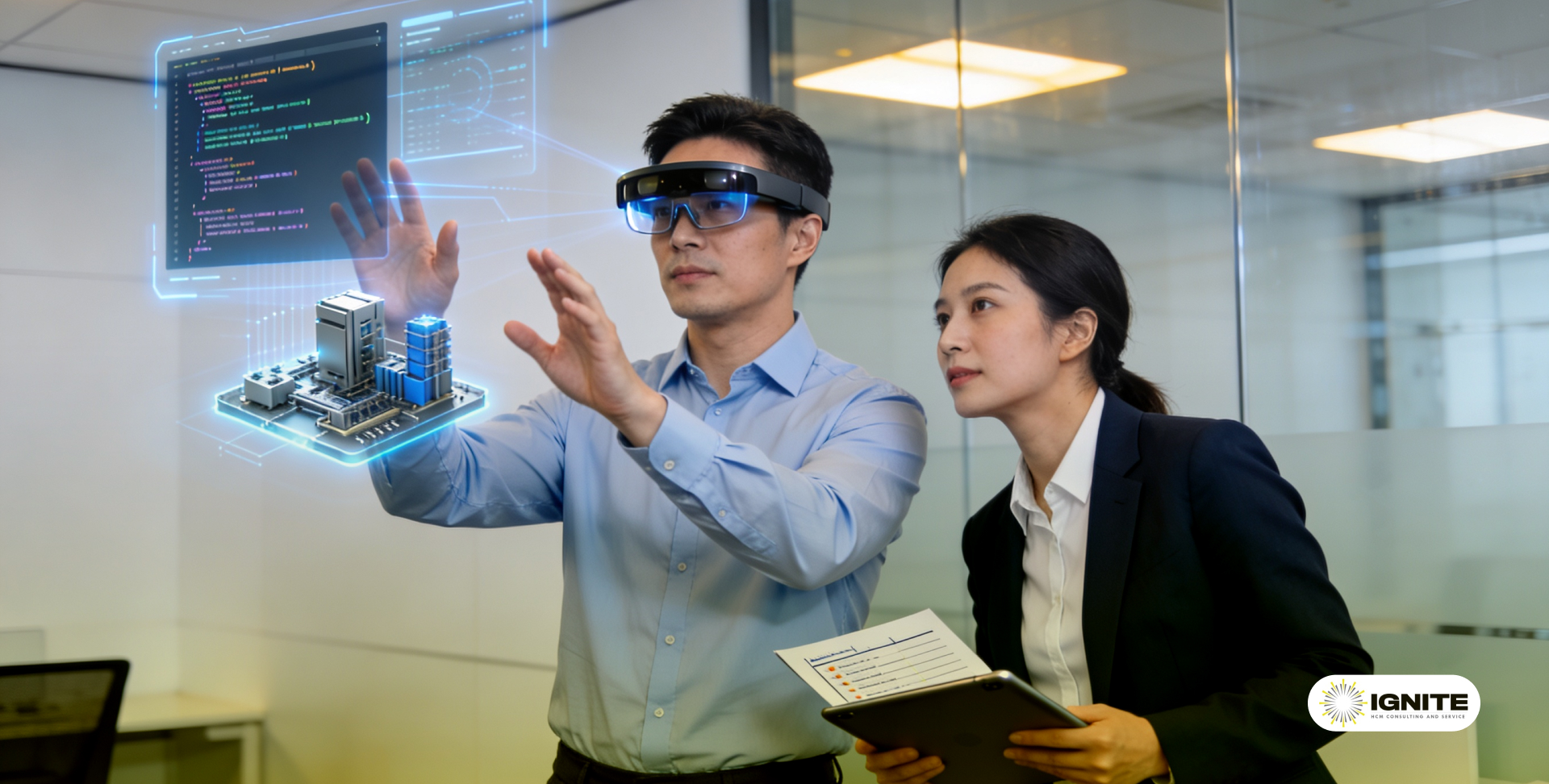
Whether or not your current employer uses AR training, understanding this shift has career implications worth considering.
Adaptability is becoming non-negotiable. The World Economic Forum estimates that 50% of all employees will need reskilling by 2025 due to technology adoption. Workers who embrace new learning methods—including AR—will have advantages in this environment.
Technical literacy matters more than ever. You don't need to become a programmer, but understanding how emerging technologies work and being comfortable using them is increasingly valuable across nearly every profession.
Learning how to learn is itself a skill. As training methods evolve, those who can quickly adapt to new learning modalities will consistently outperform those who can only learn one way.
---
The trajectory of AR technology points toward even more sophisticated applications.
AI integration will make AR training increasingly personalized. Systems will adapt in real-time based on how quickly you're grasping concepts, where you're struggling, and what learning style works best for you.
Lighter, more comfortable hardware is in development across multiple companies. Apple's recent entry into the spatial computing space signals that major investment continues to flow into this sector.
5G connectivity will enable more powerful AR experiences that don't require expensive on-device processing. This could dramatically lower costs and improve accessibility.
Standardization of content development tools will make it easier and cheaper for organizations of all sizes to create effective AR training programs.
---
Augmented reality training isn't about replacing human instructors or eliminating traditional learning entirely. It's about meeting a genuine need more effectively.
Organizations face real pressures: skills gaps, tight training budgets, safety requirements, and the constant need to adapt to changing technologies. AR addresses these challenges in measurable ways.
For employees, AR training offers something surprisingly valuable in our distraction-filled world: an engaging way to learn that actually respects your time and intelligence.
The companies investing in AR training today aren't doing so because it's trendy. They're doing it because the evidence shows it works—faster, safer, and often more enjoyably than traditional alternatives.
Whether you're a business leader considering this technology, a trainer looking to improve outcomes, or an employee wondering how your job might evolve, AR-based learning deserves your attention. The future of workplace training isn't coming. For many organizations, it's already here.
And honestly? It's more exciting than any training video you've ever watched.