It's no secret that the world of work is rapidly evolving. Disruptive technologies, shifting business priorities, and the aftershocks of a global pandemic have accelerated changes that were already well underway. One thing is clear: the skills that have served us well in the past will not be enough to thrive in the jobs of the future.
To adapt and succeed in this new landscape, organizations and individuals alike must prioritize reskilling—developing the new capabilities needed for the roles and responsibilities that will define the future of work. And given the accelerating pace of change, this reskilling needs to happen at an unprecedented scale and speed.
While reskilling has always been important, it's now an absolute imperative. Those who don't take action risk being left behind. Here's what you need to know about this critical topic.
The World Economic Forum estimates that by 2025, 50% of all employees will need reskilling as adoption of technology increases. 97 million new roles may emerge that are more adapted to the new division of labor between humans, machines and algorithms.
"The world of work is in a state of flux, which is causing considerable anxiety and uncertainty for businesses and their employees," explains Emily Poague, a Managing Director at Accenture. "To unlock post-pandemic growth, companies need to accelerate their reskilling efforts."
This reskilling revolution presents massive challenges—but also incredible opportunities for those who are proactive. Innovative companies are already implementing reskilling initiatives to gain a competitive advantage:
The reskilling revolution is not just a "nice-to-have"—it's now essential for business success in the new world of work. But what skills are most critical to focus on? And how can reskilling happen at the massive scale and accelerated pace required?

While the specific skills needed will vary by industry and role, there are several key skill domains that will be universally important:
As the workplace becomes increasingly digital-first, comfort with technology will be a baseline requirement for nearly every role. Digital fluency—the ability to leverage digital tools to communicate, collaborate, and drive business outcomes—will be essential.
This goes beyond basic computer literacy to include skills like data analysis, basic coding and web development, leveraging collaboration platforms, digital design, and more. Employees in all functions will need to be adept at using technology to solve problems and create value.
Given the rapid pace of change, one of the most valuable skills is the ability to continuously learn, adapt, and reinvent yourself. What you know today will inevitably become outdated. Success belongs to those who stay curious, agile, and committed to lifelong learning.
"The single biggest driver of business impact is the strength of an organization's learning culture," explains Josh Bersin, noted HR and reskilling expert. "Companies that learn fastest and adapt well to changing environments perform the best over time."
Cultivating learning agility, comfort with ambiguity, and a growth mindset will be key. Metacognitive skills—like creativity, critical thinking, and learning how to learn—will also be increasingly important.
As AI and automation take over more routine tasks, distinctly human skills will be vital differentiators. Emotional intelligence—the ability to recognize and manage your own emotions and the emotions of others—is crucial for leadership, collaboration, and driving change.
Similarly, social intelligence—communicating effectively, resolving conflicts, persuading and motivating others—will be essential for productive teamwork. Skills like empathy, interpersonal communication, and the ability to unite and inspire will help workers thrive no matter how much the technological landscape shifts.
Accelerating change means accelerating opportunities—for those with an entrepreneurial mindset. Thinking like an entrepreneur—seeing possibilities, taking smart risks, pivoting quickly—will be immensely valuable both for innovating within companies and striking out on one's own.
Skills like opportunity identification, design thinking, agile project management, and pitching ideas will help employees think beyond their standard job description and create unexpected value. An entrepreneurial outlook will empower workers to proactively shape the future rather than simply reacting to it.
While cross-cutting skills will be critical, deep knowledge within a specific domain—whether that's AI engineering, digital marketing, supply chain management, or myriad others—will also be extremely valuable. The key is cultivating both the depth of a subject matter expert and the adaptability to apply that expertise in new contexts.
Companies and individuals should identify the specialized skills that align with their unique strengths and the market's trajectory. By building deep expertise that complements distinctly human skills like creativity and emotional intelligence, workers can become irreplaceable even as narrow technical skills become obsolete.
Helping millions of workers build this complex mix of technical and social skills is a daunting challenge. But a number of best practices are emerging to guide reskilling efforts:
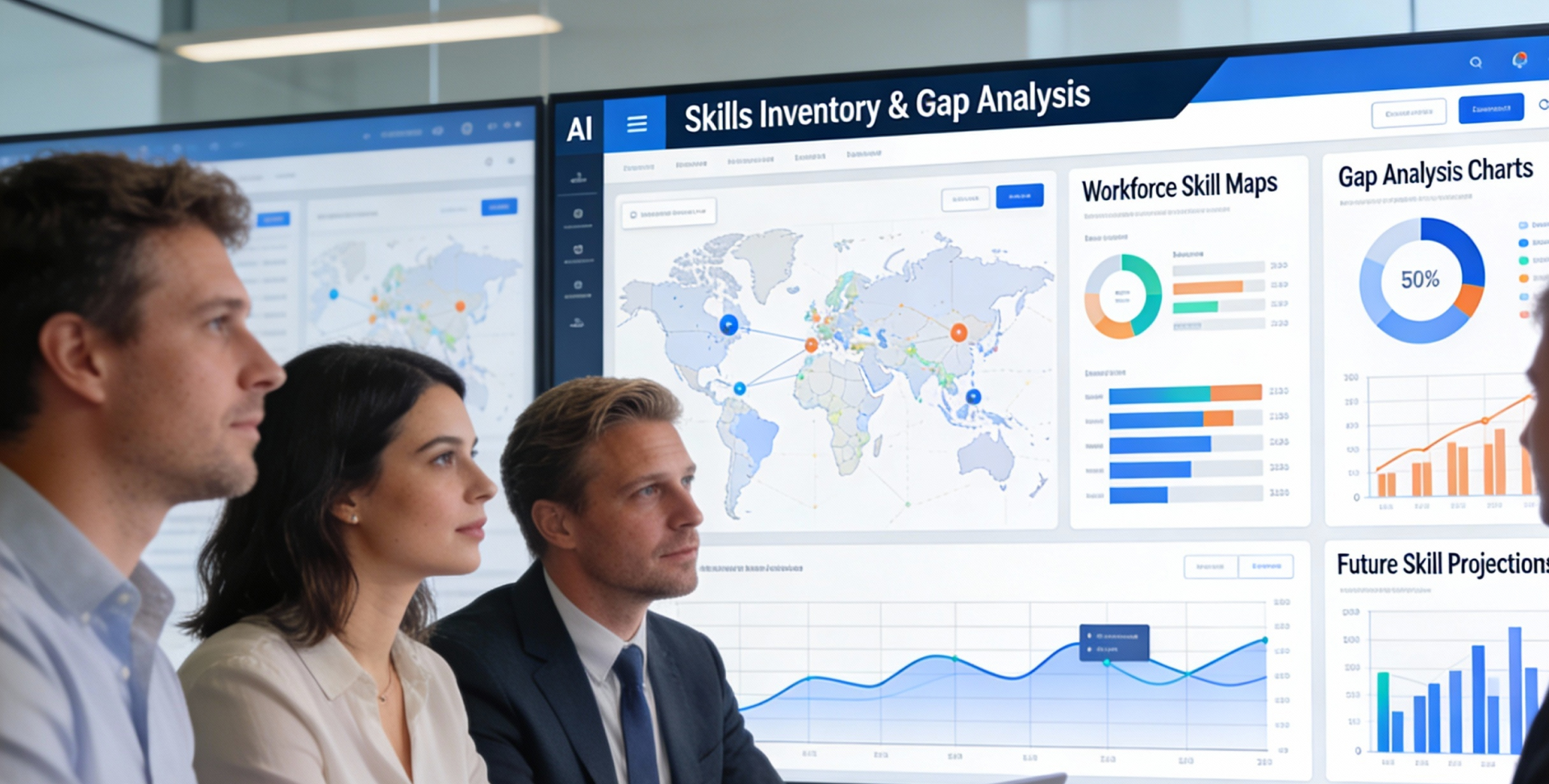
The first step is understanding your workforce's current skills and the gaps between those skills and your future needs. Many companies are using AI-powered talent management platforms to gain visibility into the skills within their organization. Individuals can also proactively assess their own skills and identify growth areas.
One-size-fits-all approaches to reskilling are unlikely to succeed. Instead, companies should provide personalized learning pathways tailored to each employee's current skills, future goals, and learning style. Reskilling is most effective when it's connected to personal and organizational purpose.
As Joe Whittinghill, Microsoft's CVP of Talent, Learning, and Insights explains: "We believe there is no better way to drive engagement and retention of our employees than to invest in their learning. As people increasingly seek meaning and purpose from their work, building new skills helps connect their individual aspirations to the bigger picture."
No single company can provide all the reskilling its employees need. Instead, leading organizations are partnering with a wide range of external providers—universities, boot camps, MOOC platforms, industry consortia, and more—to offer a rich tapestry of learning opportunities.
For example, Guild Education has pioneered a marketplace model connecting companies like Walmart, Disney and Chipotle with learning providers to create education-as-a-benefit programs. Individuals should seek out both internal and external resources to support their reskilling journey.
Given the pace of change, episodic training programs are no longer sufficient. Instead, companies need to weave continuous learning into day-to-day work. Peer-to-peer learning, experiential on-the-job training, and real-time microlearning should all be leveraged to help employees rapidly build and deploy new skills.
Airbnb has embraced this approach, as Chief Learning Officer Dr. Melissa Daimler explains: "The most impactful learning happens when it is integrated into work...We are focused on agile learning sprints tied to strategic priorities versus single training events."
While companies should provide reskilling opportunities and incentives, employees also need to take ownership of their own learning. Those who proactively seek out growth opportunities and practice self-directed learning will be best positioned for success.
AT&T has made this a key part of its Future Ready reskilling initiative. As part of the program, employees have access to individual skills assessments and online courses, but they're expected to put in the work. "Dedication is required for reskilling to pay off," says Dahna Hull, AT&T's SVP of HR. "The person who is really owning their own career will take advantage of the tools we offer."
The challenges of reskilling at scale are immense—but so are the opportunities. Those companies and individuals that embrace the reskilling revolution will be able to seize those opportunities and thrive amidst accelerating change.
As Leena Nair, Unilever's CHRO, puts it: "The future of work is about having an incredible curiosity to learn...If you have that, you will have a fantastic career."
But this bright future is not guaranteed—it will take hard work, proactive investment, and a commitment to continuous growth. We all have a responsibility—to ourselves, our teams, and society at large—to prioritize and enable reskilling.
The skills we need tomorrow will not be the same as the ones that have brought us success in the past. But if we rise to the reskilling challenge, we can create a future of work that is more skilled, more agile—and ultimately more human. The future is ours to create.
Ready to future-proof your workforce? Discover the essential skills and strategies for reskilling at scale and thriving in the rapidly evolving world of work.