The days of guessing what skills you need to future-proof your career are officially over.
Here's a truth bomb that might change how you think about your professional life: By 2030, an estimated 85 million jobs could go unfilled because there aren't enough skilled people to do them. Meanwhile, millions of workers feel stuck, uncertain about which skills to learn next or whether their current abilities will remain relevant.
It's a paradox that keeps career coaches and HR professionals up at night. But something fascinating is happening behind the scenes of major companies and forward-thinking organizations—and it involves technology that can predict your career needs before you even realize you have them.
Welcome to the era of machine learning-powered skills gap analysis. It sounds technical (because it is), but the implications for your work life, your growth, and your peace of mind? Those are deeply human.
---
Before diving into the machine learning magic, let's get clear on what we're actually talking about.
A skills gap is the difference between the skills you currently have and the skills you need to do your job effectively—or to land the job you want next. Think of it like the distance between where you're standing and where you want to be, measured in competencies rather than miles.
Skills gaps exist on multiple levels:
The tricky part? Skills gaps are constantly shifting. What counted as "advanced" knowledge five years ago might be basic literacy today. The skills that will matter most in 2030 are partially unknown, making workforce planning feel like trying to hit a moving target while blindfolded.
This is precisely where machine learning enters the picture.
---
Machine learning is a type of artificial intelligence that learns from patterns in data to make predictions or decisions—without being explicitly programmed for each specific task.
Imagine having a really smart friend who has read millions of job postings, analyzed thousands of career trajectories, tracked industry trends across every sector, and can remember all of it perfectly. Now imagine asking that friend: "What skills should I develop over the next three years?"
That's essentially what machine learning does for skills gap analysis—but at a scale and speed no human could match.
Here's how it works in practice:
Machine learning systems gather information from multiple sources:
Once the data is collected, machine learning algorithms identify patterns humans might miss. For example:
This is where things get exciting. Based on these patterns, machine learning can:
---

To make sense of how machine learning changes the game, consider the SHIFT framework—a way to think about the transformation happening in skills development:
S - Speed: Traditional skills assessments happened annually at best. Machine learning enables continuous, real-time analysis.
H - Holistic View: Instead of looking at skills in isolation, ML connects the dots between individual capabilities, team dynamics, organizational needs, and market demands.
I - Individualization: Generic training programs are giving way to personalized learning journeys tailored to each person's unique starting point and goals.
F - Forward-Looking: The shift from reactive ("we don't have enough data scientists") to predictive ("we'll need 30% more data literacy across all roles within 18 months").
T - Transparency: Workers gain visibility into exactly what skills matter for their desired career paths, removing much of the mystery from professional development.
---
Let's move from theory to practice. Here's how organizations are using machine learning for skills analysis right now:
Some large organizations have created internal platforms where employees can see opportunities across the company—projects, gigs, mentorships, and full-time roles. Machine learning matches people to opportunities based on their skills, interests, and development goals.
The benefit? Employees discover growth opportunities they didn't know existed. Companies retain talent that might have left out of boredom or lack of advancement. Everyone wins.
Instead of just looking at past job titles and degrees, ML-powered hiring tools assess candidates based on their actual skills and potential. This opens doors for people who took non-traditional career paths and helps companies find hidden talent.
Important caveat: These systems must be carefully designed to avoid perpetuating historical biases. Responsible AI development includes regular auditing for fairness across demographic groups.
Corporate learning platforms now use machine learning to recommend courses, certifications, and experiences based on:
Think of it like Netflix for professional development—but instead of suggesting shows you might like, it suggests skills that could transform your career.
Organizations can now run "what-if" scenarios: What happens to our talent needs if we expand into a new market? If we adopt this new technology? If this industry trend accelerates? Machine learning helps model these scenarios, giving leaders time to prepare rather than scramble.
---
Here's something crucial that often gets lost in discussions about AI and machine learning: technology amplifies human decision-making; it doesn't replace it.
Machine learning can identify that you might benefit from developing negotiation skills. It cannot:
The most effective skills gap analysis combines machine intelligence with human wisdom.
This means:
The technology is a flashlight helping you see the path more clearly. You still choose which path to walk.
---
Okay, let's bring this home. How should you think about machine learning-powered skills analysis as an individual navigating your career?
The shelf life of skills is shrinking. What you learned in college or early in your career may already be outdated. Rather than viewing this as exhausting, try reframing it: you have permission to keep evolving. Your career isn't a fixed identity—it's an ongoing story.
If your company uses any kind of talent management platform, learning management system, or internal mobility tool, explore it. These systems increasingly incorporate ML-powered features. Understanding what data they collect and what insights they offer can help you advocate for your own development.
This is a mental model that becomes especially relevant in an ML-analyzed world:
Machine learning can help you identify which skills to deepen and which to broaden. But the concept of T-shaped skills gives you a framework for balancing specialization with versatility.
Machine learning tools analyze emerging trends before they become mainstream. You can do something similar by:
As these systems become more common, remember: the algorithm doesn't get the final say on your career.
If ML-powered tools recommend a path that doesn't resonate with you, that's valid information too. Maybe the tool is wrong. Maybe your priorities differ from the average professional in your field. Maybe there's context the algorithm can't see.
Use the insights, but trust yourself.
---
If you're a leader or HR professional reading this, machine learning for skills analysis only works within the right cultural context.
Key principles for implementation:
Employees need to know that skills data will be used to help them grow, not to penalize or surveil them. Be transparent about what data is collected, how it's used, and who has access.
Identifying gaps without providing resources to close them creates frustration, not improvement. Machine learning should connect directly to learning opportunities, stretch assignments, and mentorship.
Traditional performance metrics often lag behind skill development. Consider tracking:
Machine learning models are only as good as their training data. If your historical data reflects biased hiring or promotion practices, the ML system may perpetuate those biases. Regular audits and diverse input into system design are essential.
---
We can't discuss machine learning and workforce data without addressing ethics. This technology touches people's livelihoods, identities, and opportunities. That demands responsibility.
ML systems can inadvertently discriminate if they're trained on biased data. For example, if historical promotion data shows that certain groups advanced more slowly (due to bias), an ML system might "learn" that pattern and perpetuate it.
The solution: Regular bias audits, diverse development teams, and human oversight of algorithmic recommendations.
Skills data is personal. Workers should know what's collected, have input into how it's used, and trust that it won't be weaponized against them.
The solution: Clear data governance policies, employee consent processes, and limitations on how skills data can influence employment decisions.
If an algorithm recommends that someone develop a skill—or worse, identifies them as lacking a critical competency—they deserve to understand why.
The solution: Explainable AI approaches that help users understand how recommendations were generated.
---
Where is this all heading? Here are some trends to watch:
Imagine having a verified, portable record of your skills that you control—like a digital wallet for competencies. Some organizations and governments are already experimenting with this concept, potentially making it easier to demonstrate skills across employers and industries.
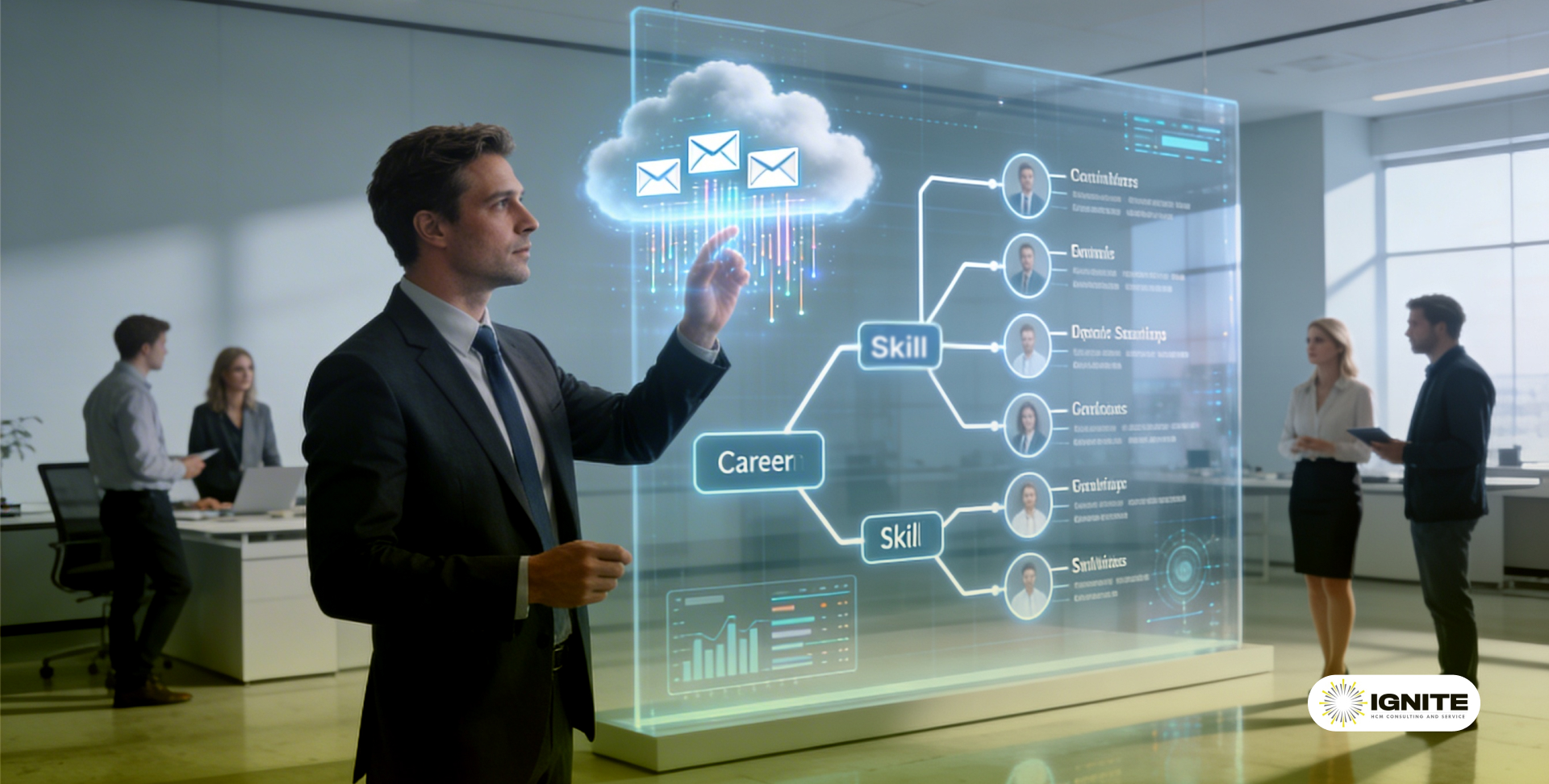
Beyond identifying current gaps, ML systems are getting better at mapping entire career journeys—showing you multiple possible paths from your current role and what each would require.
Skills assessment is moving from periodic evaluations to continuous, ambient analysis integrated into work tools. The systems learn what you can do based on what you actually do.
Currently, sophisticated ML tools for skills analysis are mostly available to large organizations. Expect these capabilities to become more accessible to small businesses and individual professionals.
---
Here's what it comes down to: Machine learning for skills gap analysis isn't about robots deciding your career. It's about having better information to make better decisions—for yourself and your organization.
The technology can surface insights you'd never discover on your own, predict trends before they're obvious, and connect you to opportunities you didn't know existed. But it works best when combined with human judgment, ethical guardrails, and a genuine commitment to helping people grow.
Your career is still your story. Machine learning is just giving you a clearer map of the terrain ahead.
And in a world where the terrain keeps changing, that clarity might be exactly what you need.
---
The bottom line: The future of work isn't about being replaced by machines—it's about partnering with intelligent systems to become the best version of your professional self. The organizations and individuals who understand this will navigate the skills landscape with confidence. Everyone else will be playing catch-up.