
The workplace wellness revolution isn't just about meditation apps and standing desks anymore—it's about how we experience work itself.
Think about the last time you needed to update your direct deposit information, check your remaining PTO, or submit a benefits question. Did that process feel seamless and empowering? Or did it feel like navigating a frustrating maze of emails, forms, and waiting?
Here's the thing: how employees interact with HR directly impacts their daily wellbeing, stress levels, and overall job satisfaction. And right now, we're witnessing a fundamental shift in how organizations are reimagining these interactions through what experts are calling "HR Shared Services 2.0."
This isn't just a tech upgrade. It's a complete mindset transformation that puts employee experience at the center—and the ripple effects on workplace wellness are profound.
---
Let's break this down in simple terms.
Traditional HR shared services emerged in the 1990s as a way to consolidate administrative HR tasks—think payroll processing, benefits administration, and employee records management—into centralized teams. The goal was efficiency and cost reduction. It worked, mostly. But it wasn't designed with the employee experience in mind.
HR Shared Services 2.0 flips the script entirely.
This evolved model combines three powerful elements: intelligent self-service portals, AI-powered automation, and human expertise reserved for complex, high-value interactions. The result? Employees get instant answers to routine questions while HR professionals can focus on work that actually requires human judgment, empathy, and strategic thinking.
According to research from Deloitte, organizations that have implemented advanced HR service delivery models report up to 40% improvement in employee satisfaction with HR services. That's not a marginal gain—that's transformational.
---
Here's where things get interesting from a wellbeing perspective.
Administrative friction is an underrated source of workplace stress. When employees can't easily access information about their benefits, struggle to get straightforward questions answered, or spend valuable time chasing down HR requests, it creates what researchers call "digital friction"—small frustrations that accumulate into significant stress over time.
Think about this mental model: Every unnecessary step, every confusing process, every delayed response is a tiny withdrawal from your employees' energy bank.
HR Shared Services 2.0 addresses this by designing experiences around how people actually want to interact with systems—quickly, intuitively, and on their own terms.
"The best HR service is the one employees don't have to think about," explains Josh Bersin, a global industry analyst known for his research on HR technology. "When getting answers is effortless, employees can redirect that mental energy toward meaningful work."
---
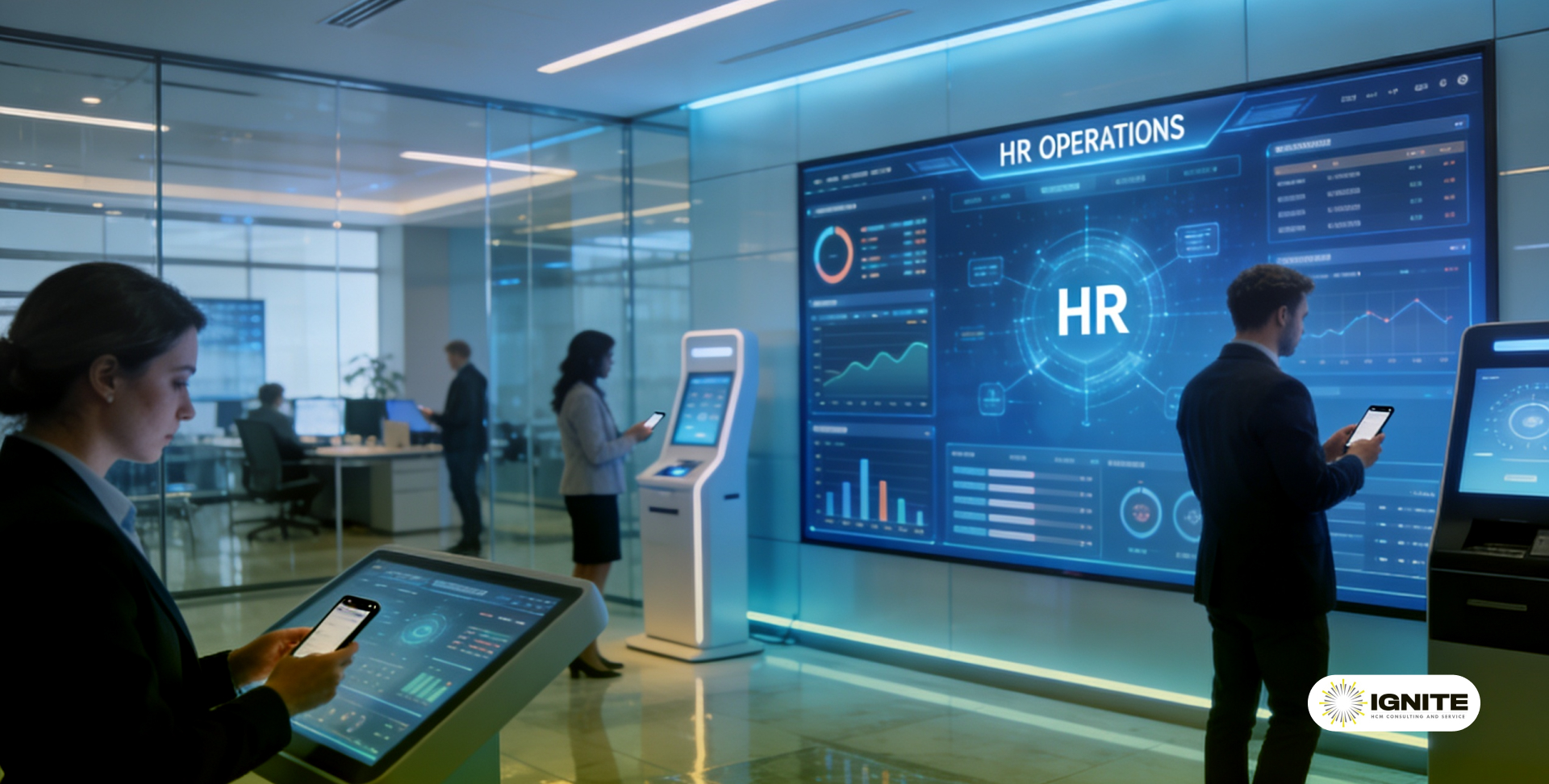
We've all encountered self-service portals that felt more like self-punishment. Clunky interfaces. Confusing navigation. Search functions that return everything except what you need.
Modern self-service is radically different.
The new generation of employee portals uses natural language processing, meaning employees can type questions the way they'd actually ask them: "How much parental leave do I get?" or "What happens to my benefits if I go part-time?"
These systems learn from every interaction, continuously improving their ability to surface relevant, personalized information. They integrate across multiple HR systems—payroll, benefits, learning management, time tracking—to provide unified answers rather than sending employees on scavenger hunts across different platforms.
Here's the key insight: effective self-service isn't about replacing human connection. It's about right-channeling—ensuring simple questions get instant answers while complex situations get the human attention they deserve.
Organizations leading in this space report that 60-70% of routine HR inquiries can be resolved through intelligent self-service, according to data from ServiceNow's HR service delivery research.
---
The word "automation" can trigger anxiety. Will robots take our jobs? Will everything become impersonal?
The reality of HR automation in 2024 is far more nuanced—and far more human-centered—than those fears suggest.
Smart automation handles the repetitive, rules-based tasks that frankly nobody enjoys doing: processing standard leave requests, updating address changes, generating offer letters, sending benefits enrollment reminders, routing approvals through the appropriate chains.
What does this free up? Time for HR professionals to do work that genuinely requires human capabilities:
Consider this framework: The Automation Empathy Equation
Automate the administrative → Elevate the human → Improve the experience for everyone
A study published by McKinsey found that HR professionals spend approximately 60% of their time on administrative tasks that could be automated. Imagine redirecting even half of that time toward strategic, people-centered work.
---
Not every HR need is created equal. Checking your pay stub is fundamentally different from navigating a harassment complaint or understanding your options after a cancer diagnosis.
HR Shared Services 2.0 recognizes this through tiered service models:
Tier 0: Self-Service
Employee portals, knowledge bases, chatbots, and automated transactions. Available 24/7, instant resolution for routine needs.
Tier 1: HR Service Center
Trained HR generalists who handle inquiries that self-service couldn't resolve. They have access to comprehensive knowledge management systems and can address most standard questions.
Tier 2: HR Specialists
Subject matter experts in areas like benefits, compensation, employee relations, or immigration. They handle complex cases requiring deep expertise.
Tier 3: HR Business Partners and Centers of Excellence
Strategic advisors who work on organizational design, change management, talent strategy, and other high-impact initiatives.
The beauty of this model? It ensures that employees with straightforward needs get fast resolution while those facing complex situations get appropriate human support and expertise.
It's the organizational equivalent of healthcare triage—getting the right resources to the right situations at the right time.
---
Let's ground this in concrete outcomes organizations are actually experiencing.
Speed improvements are dramatic. Companies implementing modern HR shared services report reducing average resolution times from days to hours for standard requests. Unilever, for example, consolidated HR services across 100+ countries and achieved 50% faster response times while improving employee satisfaction scores.
Cost efficiency follows employee experience. When self-service actually works, it reduces volume on higher-cost service channels. Organizations typically see 20-30% reduction in HR operational costs, according to research from Gartner.
HR professional satisfaction increases too. When administrative burden decreases, HR teams report higher engagement and lower burnout. They entered this profession to help people, not to manually process address changes.
Employee trust in HR grows. Perhaps most importantly, when HR services are responsive and reliable, employees are more likely to engage with HR on important matters—including sensitive issues they might otherwise suppress.
---
You don't need to be a tech expert to understand what's driving HR Shared Services 2.0, but a basic literacy helps.
AI-Powered Chatbots and Virtual Assistants
These aren't the frustrating chatbots of five years ago. Modern HR virtual assistants use large language models to understand context, handle multi-turn conversations, and know when to escalate to humans. Companies like IBM, ServiceNow, and Microsoft are leading development in this space.
Robotic Process Automation (RPA)
Software "bots" that can perform repetitive digital tasks—copying data between systems, filling out forms, processing standard transactions—faster and more accurately than humans. This handles the mechanical work that previously consumed HR coordinators' days.
Integrated Cloud Platforms
Solutions like Workday, SAP SuccessFactors, and Oracle HCM Cloud provide unified platforms where employee data, processes, and analytics live together. This eliminates the silos that historically made HR service delivery fragmented and frustrating.
Knowledge Management Systems
Intelligent content repositories that organize HR policies, procedures, and answers in ways that both employees and HR professionals can actually navigate. These systems learn which content is most useful and surface it more prominently.
---
Here's a crucial point that sometimes gets lost in discussions about automation and efficiency:
Technology should amplify human capabilities, not eliminate human connection.
The most successful HR Shared Services 2.0 implementations maintain clear boundaries around what should remain human-led:
The goal isn't to automate HR. It's to automate the administrative work within HR so that human-centered work can flourish.
As one CHRO put it: "I want my HR team to be coaches and advisors, not form processors. Technology makes that possible."
---
If your organization is considering evolving its HR service delivery model, here's a practical framework to guide the journey:
The organizations that succeed treat this as an ongoing capability evolution, not a one-time project.
---
Because transformation isn't always smooth, here's what tends to go wrong:
Launching self-service before it's ready. Nothing damages adoption faster than a frustrating first experience. Invest in getting it right before rolling out broadly.
Forgetting about non-desk workers. Many HR portals are designed for knowledge workers at computers. What about your manufacturing floor, retail stores, or field teams? Mobile-first design matters.
Underestimating change management. New tools require new habits. Employees need clear communication about what's available and why it benefits them. HR teams need training and reassurance that technology is a complement, not a threat.
Neglecting content quality. The smartest AI can't overcome poorly written, outdated, or incomplete HR content. Invest in creating clear, accurate, genuinely helpful answers.
Measuring efficiency without experience. Cost reduction is valuable, but not at the expense of employee satisfaction. Track both.
---

Step back and consider what we're really talking about here.
HR Shared Services 2.0 is one manifestation of a larger shift in how organizations are thinking about work itself.
The most forward-thinking companies are recognizing that employee experience isn't just about perks and programs—it's about how every single interaction feels. Every process. Every system. Every touchpoint.
When checking your pay stub is easy, when updating your benefits is intuitive, when getting a question answered is fast—these moments matter. They communicate respect for employees' time and intelligence. They reduce friction that otherwise accumulates into frustration.
And here's the wellness connection that brings this full circle:
When administrative burden decreases, cognitive load lightens. When self-service is empowering rather than frustrating, autonomy increases. When HR professionals have time for genuine human connection, support improves.
These aren't soft benefits. They're foundational to how people experience work every day.
---
Whether you're an HR professional, a business leader, or simply someone navigating your own employer's HR systems, here's what to take away:
For HR professionals: This evolution is an opportunity, not a threat. The administrative tasks that technology can handle aren't why you chose this career. Automation frees you to do work that matters.
For business leaders: Employee experience directly impacts engagement, retention, and performance. HR service delivery is an underappreciated lever for improvement. Investment here pays dividends.
For everyone navigating workplace systems: Advocate for better. When self-service doesn't work, when processes feel unnecessarily complex, when you can't get answers—that feedback matters. The best organizations are listening.
---
HR Shared Services 2.0 isn't a destination. It's a direction.
The organizations that will thrive are those that continuously ask: How can we make this easier? How can we make this better? How can we respect people's time while providing genuine support when they need it?
Technology enables this. But it's ultimately about something more fundamental—a commitment to treating employees as people worthy of excellent service, not as administrative problems to be processed.
That's the real transformation. And it's one worth pursuing.
The future of HR isn't about choosing between efficiency and humanity. It's about using efficiency to create more space for humanity.
---
The bottom line: HR Shared Services 2.0 represents a meaningful evolution in how organizations serve their people—combining intelligent self-service, thoughtful automation, and preserved human connection. When implemented well, it reduces friction, improves experiences, and frees HR professionals to do the meaningful work they're best suited for. In a world where workplace wellbeing matters more than ever, that's a transformation worth paying attention to.