In today's multigenerational workforce, age bias and ageism remain pervasive problems. While diversity and inclusion initiatives have made significant strides in promoting gender and racial equity, the issue of age discrimination is often overlooked. However, fostering an age-inclusive workplace culture is crucial for attracting and retaining top talent, driving innovation, and ensuring long-term business success.
Generational equity refers to the fair treatment and equal opportunities for employees of all ages. It recognizes that each generation brings unique strengths, perspectives, and experiences to the table. By embracing generational diversity, organizations can tap into a broader range of skills, ideas, and insights.
Moreover, promoting age inclusivity is not only a matter of ethics and social responsibility but also a smart business strategy. As the workforce continues to age and people work later into life, companies that fail to address ageism risk losing out on valuable talent and institutional knowledge. On the other hand, those that prioritize generational equity can benefit from improved employee engagement, productivity, and innovation.
To effectively combat age bias and ageism, it's essential to understand their underlying causes. Some common factors contributing to age discrimination include:
Stereotypes and misconceptions: Negative stereotypes about older workers being less adaptable, tech-savvy, or productive persist, despite evidence to the contrary. Similarly, younger employees may face assumptions about their lack of experience or commitment.
Rapid technological change: As technology advances at an unprecedented pace, some organizations may perceive older workers as less capable of keeping up with new tools and processes.
Generational differences in communication and work styles: Misunderstandings can arise from variations in communication preferences, work habits, and values across generations.
Unconscious bias: Like other forms of bias, age bias can operate on an unconscious level, influencing hiring, promotion, and development decisions without explicit intent.
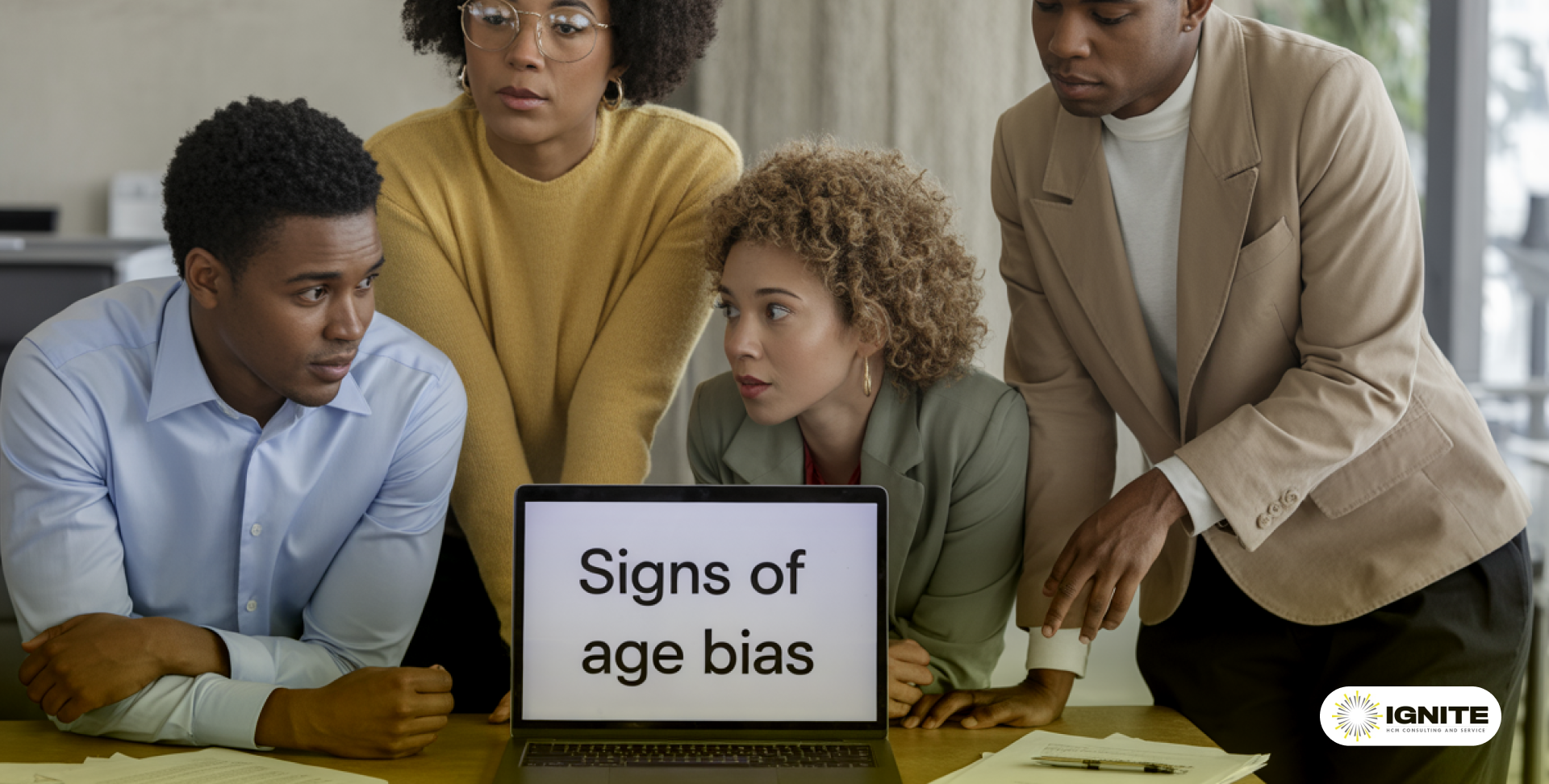
Age bias can manifest in various ways within the workplace. Some red flags to watch out for include:
Biased language in job postings: Job descriptions that use terms like "young," "energetic," or "digital native" can deter older candidates from applying.
Lack of age diversity in leadership: If an organization's senior roles are consistently filled by individuals from a narrow age range, it may signal a bias against older or younger talent.
Limited career development opportunities: When training, mentoring, and advancement programs are disproportionately offered to certain age groups, it can perpetuate age-based inequities.
Age-related microaggressions: Subtle comments or jokes about someone's age, such as "You're too young to remember..." or "Do you even know what a fax machine is?" can create an unwelcoming environment.
To foster generational equity and combat age bias, organizations can implement several strategies:
Conduct age diversity audits: Regularly assess the age composition of your workforce, especially in leadership roles, to identify potential disparities and track progress over time.
Provide age bias training: Educate employees at all levels about the impact of age bias, how to recognize it, and how to promote age inclusivity in their interactions and decision-making.
Establish cross-generational mentorship programs: Encourage knowledge sharing and relationship building across age groups through formal mentorship initiatives.
Offer flexible work arrangements: Accommodate the diverse needs and preferences of employees at different life stages by providing options such as remote work, flexible scheduling, and phased retirement.
Celebrate generational diversity: Highlight the contributions and achievements of employees from all age groups through internal communications, employee resource groups, and company events.
Use inclusive language and imagery: Ensure that company messaging, branding, and recruitment materials reflect age diversity and avoid perpetuating age-based stereotypes.
Foster a culture of continuous learning: Provide equal access to training and development opportunities for employees of all ages, emphasizing the value of lifelong learning and growth.
Creating an age-inclusive workplace culture requires strong leadership commitment and action. Leaders at all levels must model inclusive behaviors, challenge age-based biases, and champion generational equity initiatives. Some key steps leaders can take include:
Setting clear expectations: Communicate the organization's commitment to age inclusivity and the expectation that all employees, regardless of age, will be treated with respect and fairness.
Encouraging diverse perspectives: Actively seek out and value input from employees of different age groups, recognizing the unique insights and experiences they bring to the table.
Addressing age bias incidents: Take prompt and appropriate action when instances of age discrimination or bias are reported, demonstrating a zero-tolerance stance.
Championing age-inclusive policies: Advocate for and implement policies and practices that promote generational equity, such as age-neutral hiring processes and equitable access to development opportunities.
Monitoring progress and accountability: Regularly assess the organization's progress in achieving age diversity goals and hold leaders accountable for creating an inclusive environment.

To ensure the effectiveness of age inclusivity efforts, organizations should establish metrics and regularly measure their impact. Some key indicators to track include:
Age diversity in hiring and promotions: Monitor the age distribution of new hires and employees promoted to leadership roles to ensure fair representation across age groups.
Employee engagement and retention: Assess whether age-inclusive practices contribute to higher levels of employee satisfaction, engagement, and retention across all age groups.
Innovation and collaboration: Evaluate the impact of cross-generational collaboration on innovation, problem-solving, and overall team performance.
Customer satisfaction: Consider whether an age-diverse workforce better reflects and serves the needs of a multigenerational customer base.
Several companies have successfully implemented age-inclusive practices and reaped the benefits of a multigenerational workforce. For example:
PwC launched "YourLife," a holistic well-being program that supports employees at different life stages, offering resources for career development, financial planning, and work-life balance.
Unilever introduced a "Returnership" program to provide internships for experienced professionals who have taken career breaks, helping them reenter the workforce and bringing valuable skills back to the company.
Barclays launched "Bolder Apprenticeships," an apprenticeship program designed for individuals over 50, recognizing the value of experience and transferable skills.
These examples demonstrate that prioritizing generational equity not only benefits employees but also drives business success by fostering a more diverse, engaged, and innovative workforce.
As the workforce continues to evolve and lifespans extend, the importance of generational equity will only grow. Organizations that prioritize age inclusivity today will be well-positioned to attract and retain top talent, drive innovation, and adapt to the changing demographics of the future workforce.
Moreover, promoting age inclusivity contributes to a more equitable and just society, challenging long-standing biases and creating opportunities for individuals of all ages to thrive. By embracing the strengths and perspectives of every generation, we can build more resilient, adaptable, and successful organizations and communities.
Addressing age bias and ageism in modern workplaces is a critical step towards achieving generational equity. By understanding the roots of age bias, recognizing its manifestations, and implementing strategies to foster age inclusivity, organizations can create cultures where employees of all ages feel valued, supported, and empowered to contribute their best work.
Leadership plays a crucial role in championing age inclusivity, setting expectations, and driving change. By measuring the impact of age-inclusive practices and learning from real-world examples, organizations can continuously improve their efforts and reap the benefits of a truly multigenerational workforce.
Ultimately, promoting generational equity is not only a business imperative but also a moral obligation. By embracing age diversity and creating inclusive workplaces, we can build a future where everyone has the opportunity to thrive, regardless of their age. It's time to bridge the generational divide and unlock the full potential of our multigenerational workforce.
Building an age-inclusive workplace? Discover how to combat age bias, embrace generational diversity, and unlock the full potential of your multigenerational workforce.