In today's competitive job market, providing an exceptional employee experience is more important than ever. Companies are realizing that investing in their workforce pays dividends in terms of higher engagement, productivity, and retention. But where do you start when it comes to optimizing the employee journey?
Enter employee journey analytics—a data-driven approach to understanding and improving each stage of an employee's interactions with your organization, from initial recruitment to offboarding. By mapping out key employee touchpoints and measuring sentiment and feedback at each step, businesses can pinpoint areas for improvement and take action to create a more fulfilling employee experience.
Before diving into how to conduct an employee journey analysis, it's worth examining why the employee experience is so crucial to business success:
Engaged employees are more productive. Research shows that companies with highly engaged workforces outperform their peers by 147% in earnings per share. When workers feel valued and supported, they're motivated to do their best work.
Employee experience impacts customer experience. How your employees feel is reflected in their interactions with your customers. Companies that excel at employee engagement have 1.5 times more engaged customers than less-engaged competitors.
A strong employer brand attracts top talent. In today's social media-driven world, both positive and negative employee experiences quickly become public. Building a reputation as a great place to work helps you recruit high-quality candidates.
The employee experience extends beyond the office. Remote and hybrid work are here to stay. Organizations must be intentional about engaging employees across locations and ensuring a consistent cultural experience.
Given the high stakes, it's clear that optimizing the employee journey should be a top priority for HR teams and business leaders alike. Employee journey analytics provides a structured way to understand the current state and drive meaningful improvements.
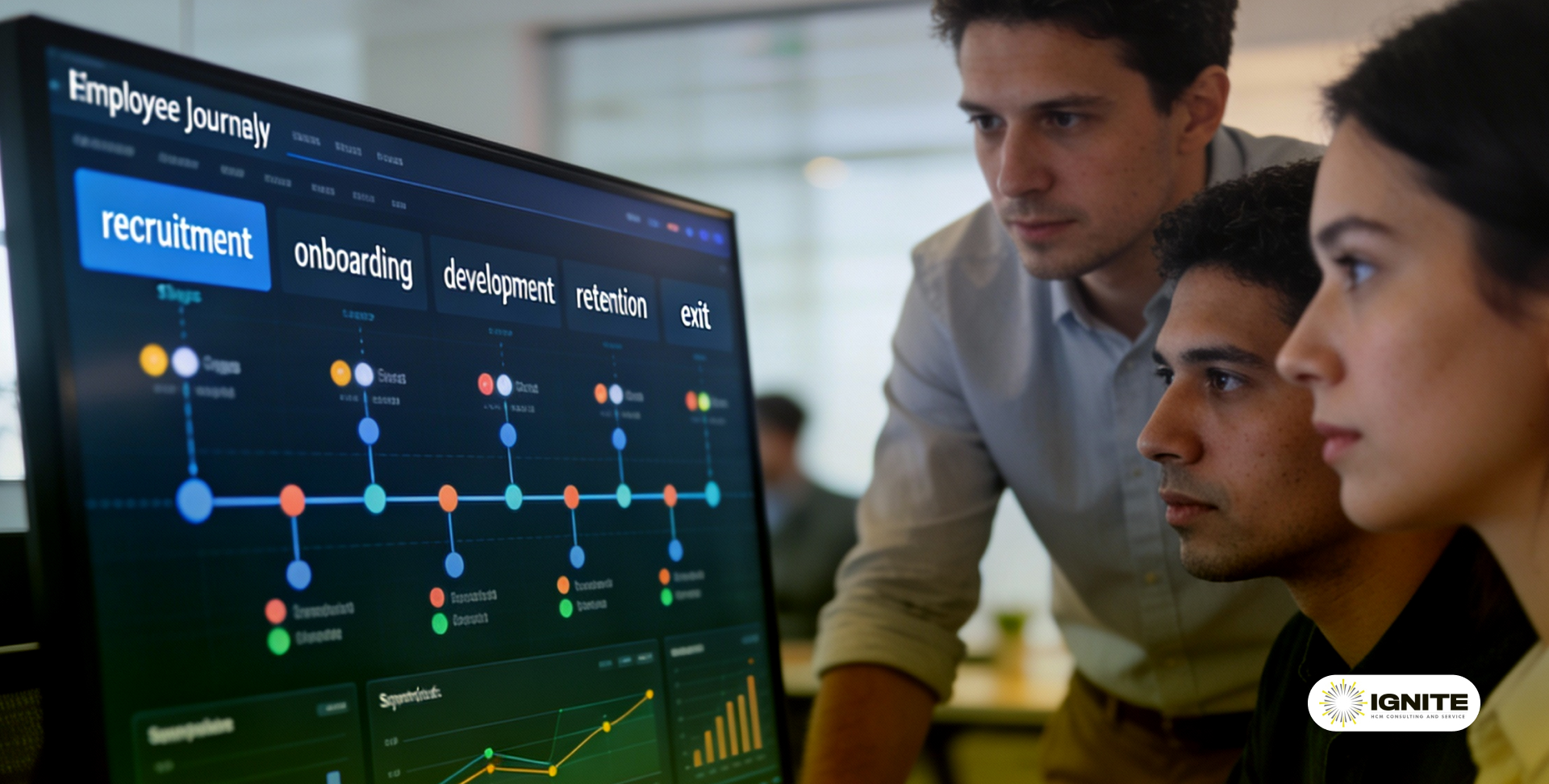
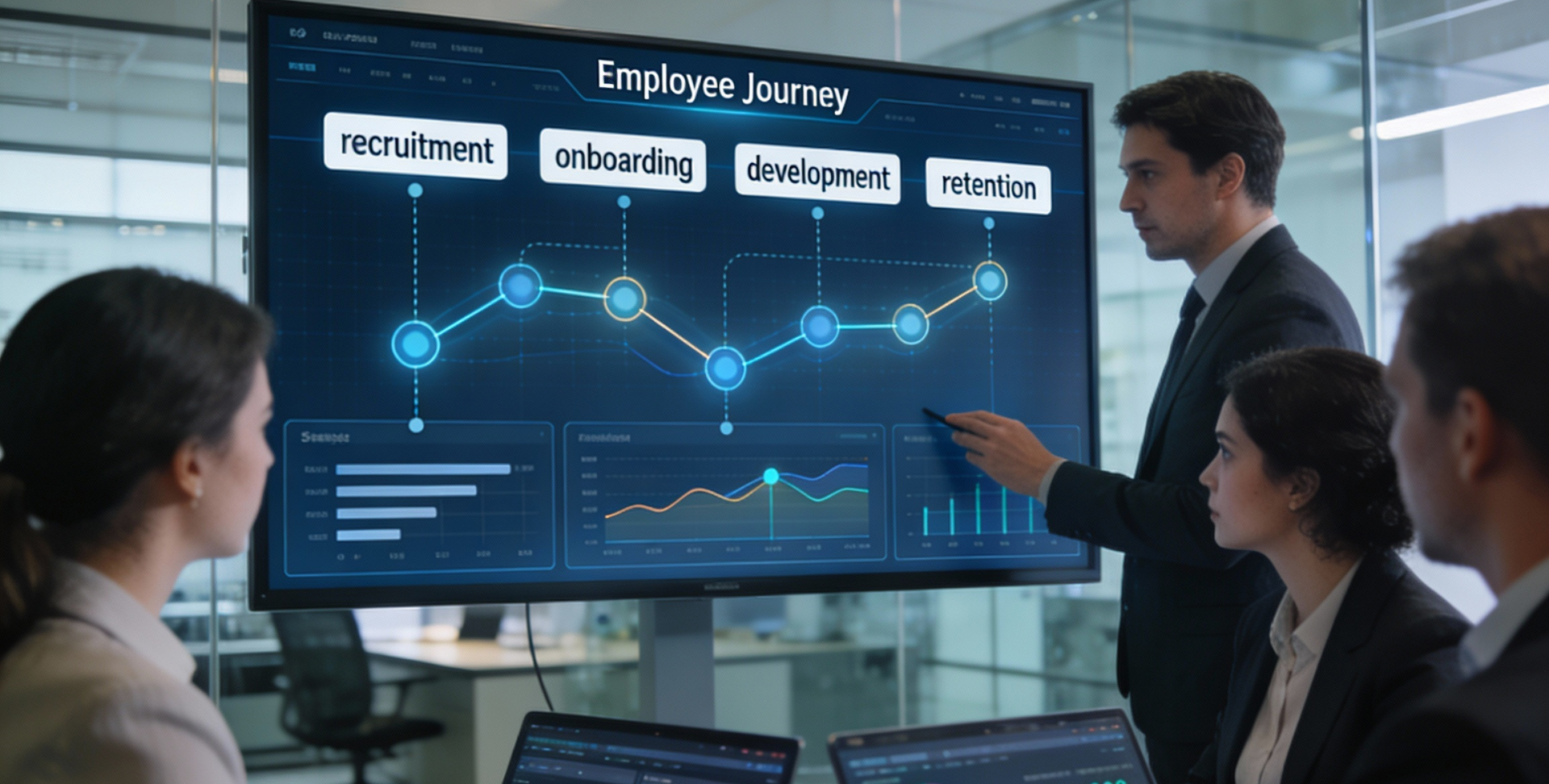
An employee journey map is a visual representation of an employee's experience with your company over time. The journey is broken down into stages, and each stage consists of touchpoints—the various moments and interactions an employee has with your organization. Here's how to get started:
The first step is to outline the major stages an employee passes through. These will vary depending on your company, but a typical employee journey includes:
Under each stage, list out the specific touchpoints an employee encounters. For example, recruitment touchpoints could include the initial job posting, application submission, interview process, and offer letter.
With your touchpoints identified, the next step is to collect data on how employees are experiencing each interaction. There are several ways to gather this feedback:
Surveys: Many companies send engagement surveys to employees at regular intervals (e.g. quarterly). Consider adding specific questions tied to journey touchpoints.
Interviews: One-on-one conversations with employees can provide qualitative insights to enrich your understanding of the survey data. Be sure to interview a representative sample across teams, tenures, and demographics.
Focus groups: Small group discussions are another way to gather qualitative feedback, and have the added benefit of highlighting shared experiences and differing perspectives.
Digital data: Website analytics, email open rates, and other digital metrics can give you a quantitative view of employee engagement, particularly for remote workers.
The goal is to understand employees' objective experiences as well as their subjective feelings and perceptions at each touchpoint.
With survey, interview, and digital data in hand, you can begin to see patterns and draw insights. For each stage and touchpoint ask:
Advanced employee journey analytics platforms can help you integrate and visualize all your data in one place. Look for common themes across touchpoints and identify the highest and lowest rated aspects of the experience.
The final step is to turn insights into action. Based on your analysis, where are the biggest opportunities to improve the employee experience? Some ideas:
Start with a few key initiatives, measure the impact, and iterate over time. Employee journey analytics isn't a one-and-done activity; regularly collecting and acting on feedback should be an ongoing priority.
To illustrate how employee journey analytics makes a difference, consider these real-world examples:
IBM uses AI to analyze employee sentiment across over 200 touchpoints. By identifying at-risk employees and delivering personalized "nudges," they've reduced attrition by 2-5%.
Automotive supplier Aptiv mapped its candidate journey to understand why nearly 50% of job offers were being declined. They uncovered issues like misaligned compensation and a complex hiring process, made changes, and saw an 18% increase in offer acceptance.
Retailer Sephora used employee feedback data to create "Sephora University," an extensive onboarding, training, and development program. Store employees who completed the program saw 25% higher productivity.
In each case, employee journey analytics enabled the company to find and fix experience gaps, resulting in quantifiable business impact. Though the approaches may vary, any organization can benefit from a structured, data-driven look at the employee experience.
If you're new to employee journey analytics, the prospect of analyzing every employee interaction can seem overwhelming. Remember, you don't have to boil the ocean on day one. Start small with a single stage or persona and expand your efforts over time.
As you get started, here are a few best practices to keep in mind:
Secure executive buy-in: Employee experience initiatives can require investments in tools, programs, and headcount. Ensure leaders understand the business case and are aligned on goals.
Involve employees in the process: Avoid the perception of an "ivory tower" HR exercise by engaging employees directly in identifying touchpoints and brainstorming improvements.
Prioritize based on impact: With many aspects of the employee journey to address, zero in on the areas that matter most to your workforce. Focus groups and interviews can help you understand the highest-value opportunities.
Celebrate wins along the way: Employee journey work is ongoing, so be sure to acknowledge milestones and bright spots as you progress. Showcasing the impact of your efforts will help sustain momentum.
Implementing employee journey analytics takes effort, but the payoff is well worth it. By understanding and optimizing each touchpoint, you can create an employee experience that engages talent, drives productivity, and positions your company for long-term success.
As the business world continues to evolve, employee journey analytics will only become more important. The rise of remote and hybrid work has dramatically changed the employee experience, and companies must adapt their engagement strategies accordingly.
At the same time, advances in artificial intelligence and machine learning are making it easier to collect and analyze employee data at scale. Predictive analytics can help companies anticipate employee needs and proactively address issues before they lead to turnover.
Ultimately, the goal of employee journey analytics is to create a personalized, meaningful experience for every worker. By understanding the unique needs and preferences of your workforce, you can design an employee journey that maximizes engagement, productivity, and business impact.
The most successful companies of the future will be those that put their people first. Employee journey analytics provides the roadmap to get there—one touchpoint at a time.
Ready to optimize your employee experience? Discover how employee journey analytics can help you map touchpoints and drive meaningful improvements across the entire employee lifecycle.