Your resume is about to become unhackable—and that's a bigger deal than you might think.
If you've ever waited weeks for a background check to clear, watched a job offer slip away because your former employer took forever to verify your employment dates, or worried about your sensitive personal information floating around in some company's outdated database, blockchain technology is about to become your new best friend.
Here's the thing: The way companies store, share, and verify your work history is fundamentally broken. We're talking about systems built decades ago, vulnerable to data breaches, human error, and outright fraud. And in a world where the average cost of a data breach hit $4.45 million in 2023 according to IBM's annual report, something has to change.
Enter blockchain—the same technology behind cryptocurrency—now making its way into human resources departments worldwide. But before you click away thinking this is just another tech buzzword, stick with me. This shift could genuinely transform how you control your own career narrative, protect your personal data, and move between jobs with unprecedented ease.
---
Let's break this down without the tech jargon.
Imagine a notebook that thousands of people have identical copies of. Every time someone writes something new in the notebook, everyone's copy updates automatically. And here's the kicker: once something is written, it can never be erased or changed without everyone knowing.
That's blockchain in a nutshell—a distributed, tamper-proof digital record.
Now apply that concept to your employment records. Your job titles, dates of employment, certifications, degrees, performance achievements, and professional credentials could all live on a blockchain. No single company or person controls this information. It can't be hacked by targeting one database. And it can be verified instantly by anyone you give permission to see it.
"The traditional HR data model puts all the eggs in one basket," explains research from Deloitte's human capital practice. "Blockchain distributes that risk while simultaneously increasing transparency and speed."
For you, this means:
---
To understand why blockchain matters, you need to understand what's currently broken.
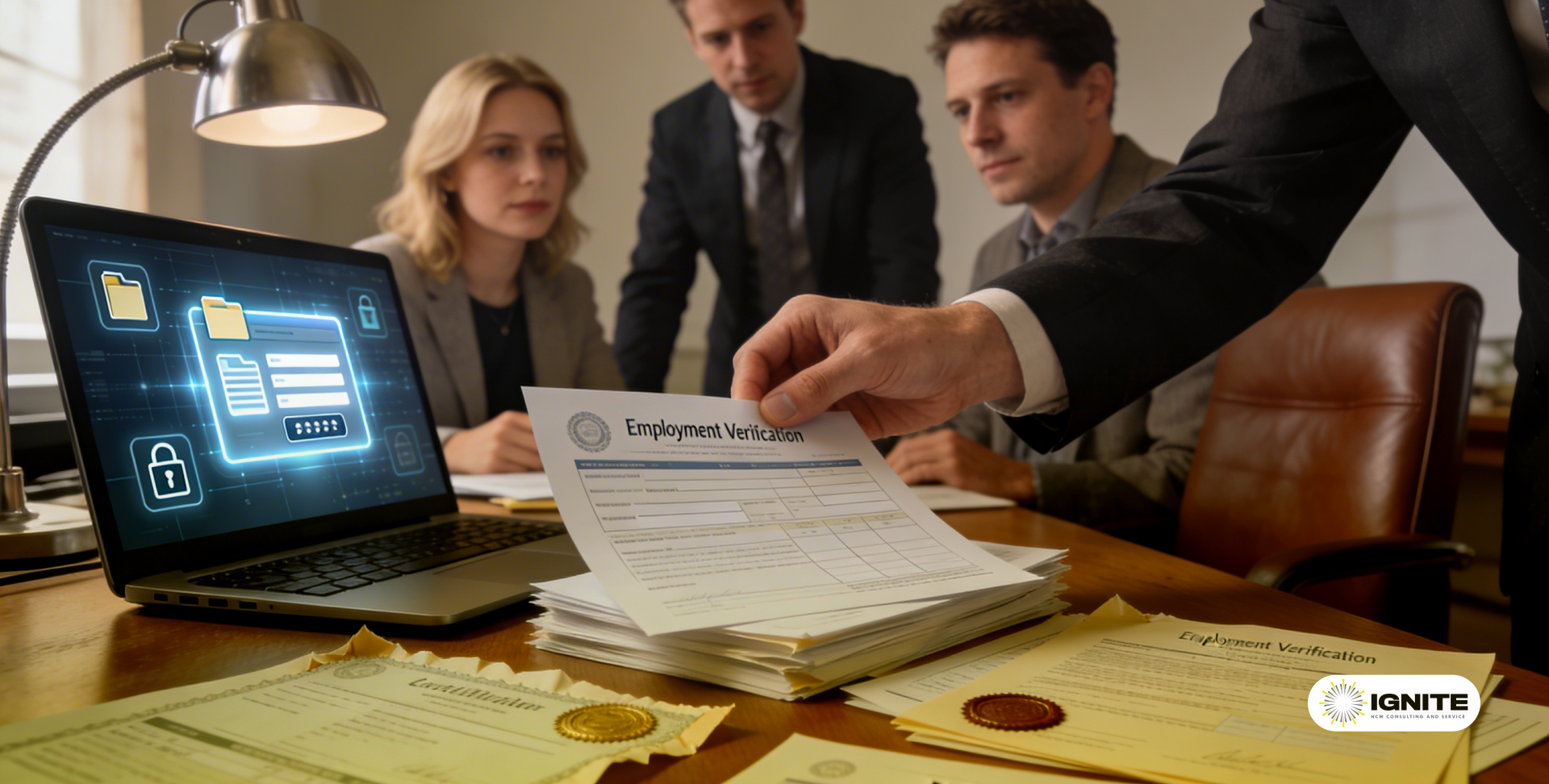
When you apply for a new job, your potential employer typically hires a third-party company to verify your background. That company then contacts your previous employers, schools, and certification bodies—one by one—requesting confirmation of your credentials.
This process takes an average of five to seven business days, according to the Society for Human Resource Management (SHRM). But it can stretch to weeks or even months for complex cases or international hires.
During this time, job offers hang in limbo. Start dates get pushed back. Sometimes, positions go to other candidates simply because their verification completed faster.
HR departments are treasure troves of sensitive information: Social Security numbers, bank account details, home addresses, salary history, medical information for benefits, and more.
This makes them prime targets for hackers.
According to the Identity Theft Resource Center, data breaches in 2023 hit an all-time high, with over 3,200 incidents affecting more than 350 million victims. Many of these breaches specifically targeted employment and HR records.
When a company you worked for five years ago gets hacked, your personal information—information you have no control over—becomes exposed.
Resume fraud is more common than most people realize. A 2020 study by ResumeLab found that 36% of Americans admitted to lying on their resumes. These lies range from inflated job titles to completely fabricated degrees.
The current verification system catches some of this fraud—but not all of it, and not quickly. Blockchain could change that by making credentials instantly verifiable and permanently recorded.
---
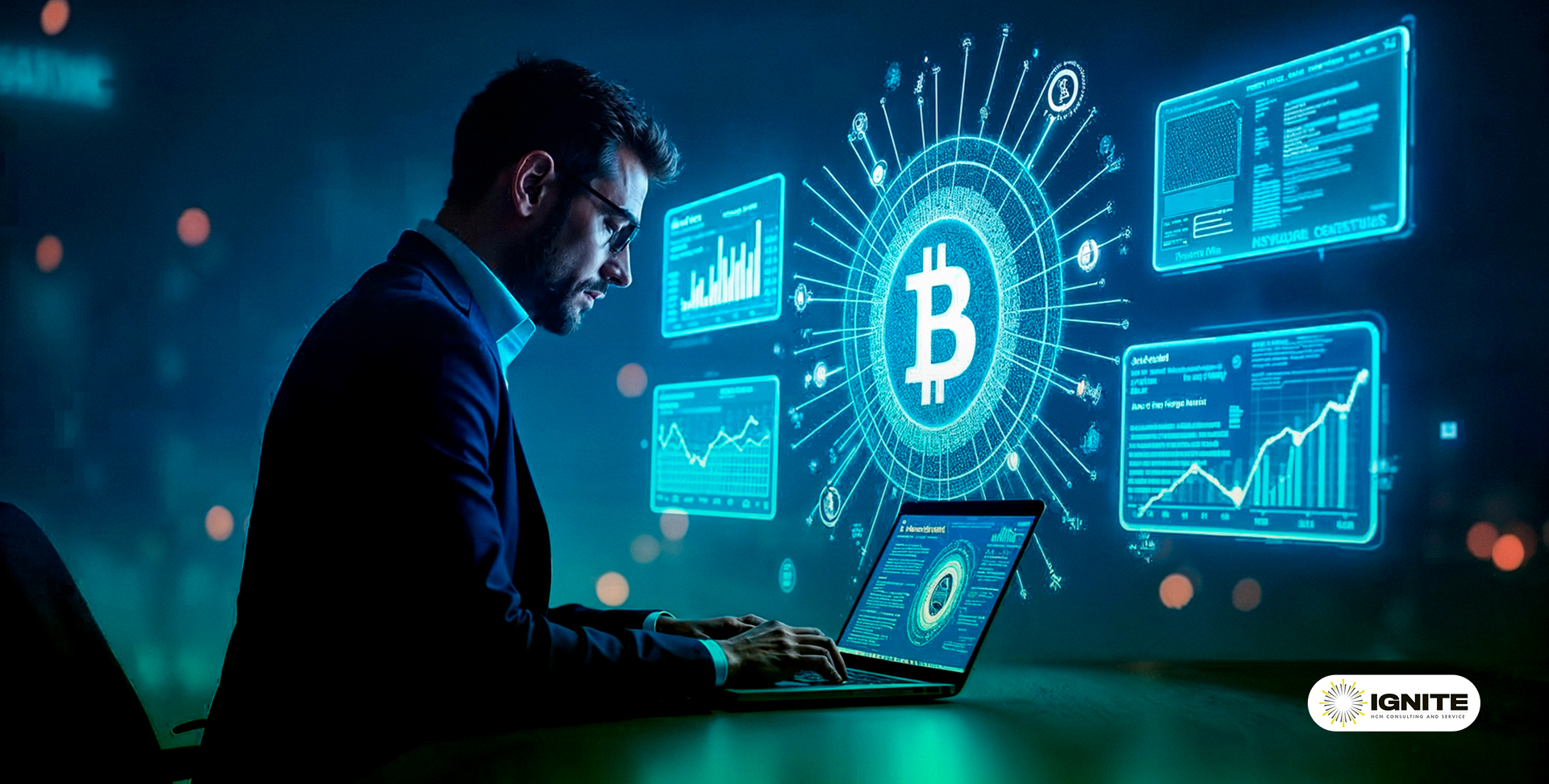
Let's get specific about what blockchain-powered HR looks like in practice.
This is perhaps the most revolutionary concept. In blockchain-based HR systems, you control your professional identity—not your former employers, not a third-party verification company, not a government database.
Self-sovereign identity means you hold a digital wallet containing verified credentials. When a new employer needs to confirm your master's degree, you share a cryptographic proof from your wallet. They can instantly verify it's legitimate without needing to contact your university.
The European Union is already moving in this direction with its European Blockchain Services Infrastructure (EBSI), which includes a framework for verifiable credentials in employment and education.
Smart contracts are self-executing agreements coded into the blockchain. In HR terms, this means verification processes that would normally take days happen automatically in seconds.
Here's how it works: When you complete a certification, pass a background check, or finish a degree, that achievement gets recorded on the blockchain through a smart contract. The contract automatically timestamps and authenticates the record. Later, when an employer queries your credentials, another smart contract instantly confirms or denies the verification—no phone calls, no emails, no waiting.
When your employment history is recorded on a blockchain, it becomes immutable—meaning it cannot be altered after the fact.
This protects everyone. Employees can't falsely claim promotions they never received. Employers can't deny positions they actually held. And the historical record remains intact even if a company goes out of business, loses its records, or simply becomes unresponsive to verification requests.
---
This isn't theoretical. Organizations around the world are already implementing blockchain-based HR solutions.
IBM has been a pioneer in using blockchain for credential verification. The tech giant partnered with several universities to issue blockchain-based digital credentials to students completing IBM training programs. These credentials can be shared via social media, included in digital resumes, and instantly verified by potential employers.
Walmart, one of the world's largest private employers, has explored blockchain technology for multiple HR applications, including tracking certifications for its pharmacy technicians and managing vendor credentials across its massive supply chain.
The Massachusetts Institute of Technology began issuing blockchain-based digital diplomas to graduates in 2017. Graduates receive a verified, tamper-proof digital version of their credentials that they own permanently and can share with any employer or institution.
UK-based startup Appii offers a blockchain platform specifically designed for career history verification. Users can request that former employers verify their employment details on the blockchain, creating a permanent, trusted record.
---
Let's translate all this technology into real-world advantages for your career and peace of mind.
When your credentials are blockchain-verified, the hiring process accelerates dramatically. Background checks that took weeks could happen in minutes. This means quicker start dates, less limbo between jobs, and faster access to paychecks and benefits.
Your verified credentials travel with you throughout your career. Change jobs ten times? Your entire professional history remains accessible and verifiable. Worked for a company that shut down? Your employment record survives independently.
Because blockchain distributes data across many nodes rather than storing it in one central database, it's inherently more secure. There's no single point of failure for hackers to target. And cryptographic encryption protects your information even if individual nodes are compromised.
With self-sovereign identity, you decide who sees what. Sharing salary history from a previous job? That becomes your choice, not an obligation. Potential employers can verify you worked somewhere without accessing details you'd rather keep private.
You're protected against others fraudulently using your identity. And if a former employer tries to deny you worked there or misrepresent your role, the blockchain record tells the true story.
---
Here's a helpful framework for understanding blockchain HR: Your career credentials become like an internationally recognized passport.
When you cross a border, you don't need the destination country to call your home country to verify you're a citizen. Your passport, issued by a trusted authority and containing embedded security features, provides instant verification.
Blockchain credentials work the same way. They're issued by trusted sources (universities, employers, certification bodies), embedded with cryptographic security, and instantly verifiable by anyone you choose to share them with.
Your career passport travels with you. You control it. And it never expires.
---
No technology is perfect, and blockchain HR systems face real challenges.
For blockchain verification to work seamlessly, widespread adoption is necessary. If only half your previous employers use blockchain-based systems, you still face traditional verification headaches for the others.
While blockchain offers unprecedented data control, it also creates permanent records. In some cases, the right to be forgotten—a key principle in privacy laws like GDPR—may conflict with blockchain's immutability. Solutions like "private" or "permissioned" blockchains are emerging to address this, but the regulatory landscape is still evolving.
Many HR departments, particularly at smaller companies, lack the technical expertise to implement blockchain systems. User-friendly solutions are improving, but we're not yet at plug-and-play simplicity.
Multiple blockchain platforms exist, and they don't always communicate well with each other. Industry-wide standards are developing but haven't yet reached universal adoption.
---
Even if your current employer isn't using blockchain HR systems, you can start preparing for this shift.
When completing certifications, degrees, or training programs, ask if digital or blockchain-verified credentials are available. Platforms like Credly and Accredible already offer blockchain-backed digital badges that you can display on LinkedIn and other professional profiles.
Keep copies of all employment verification letters, pay stubs, and official correspondence. If and when your records are migrated to blockchain systems, having thorough documentation will make the process smoother.
If you work in HR or have influence over company technology decisions, advocate for exploring blockchain-based credential verification. The competitive advantages in recruiting and talent management are significant.
The blockchain HR landscape is evolving rapidly. Following industry publications and organizations like SHRM, Deloitte's Human Capital practice, and HR technology news sources will help you stay current.
---
Zoom out for a moment, and blockchain HR represents something larger than just faster background checks.
We live in an era of declining institutional trust. People are increasingly skeptical of what companies, governments, and organizations claim. At the same time, digital fraud and identity theft continue to rise.
Blockchain offers a technological foundation for rebuilding trust through verification rather than faith.
When your credentials are blockchain-verified, neither you nor a potential employer needs to simply trust the other party. The truth is mathematically proven and permanently recorded.
This shift toward "trustless" systems—where verification replaces faith—could fundamentally reshape not just employment but professional relationships across industries.
---
Industry analysts predict several developments in blockchain HR over the next five years:
---
The way your work history is stored, verified, and shared is about to change fundamentally—and mostly for the better.
Blockchain technology offers genuine solutions to real problems: slow verification processes, vulnerable databases, widespread credential fraud, and lack of individual control over personal data.
This doesn't mean blockchain is a magic solution to every HR challenge. Adoption will take time. Technical and regulatory hurdles remain. And like any technology, implementation quality will vary.
But the trajectory is clear. The future of HR data is decentralized, verified, and controlled by you.
Your career is too important to leave to outdated systems and vulnerable databases. The technology to protect it, verify it, and carry it with you throughout your professional life is here. The question isn't whether blockchain will transform HR data management—it's how quickly you'll be able to take advantage of it.