
Your face is now your timecard—but should it be?
Picture this: You walk into work, glance at a sleek tablet mounted on the wall, and within two seconds, you're clocked in. No fumbling for badges. No forgotten passwords. No buddy punching for your coworker who's running five minutes late.
This is the reality for millions of workers across the country right now. Biometric time-tracking—using your fingerprint, face, or even the unique pattern of your iris to record when you arrive and leave work—has quietly become one of the most significant workplace technology shifts of the past decade.
And honestly? It's complicated.
On one hand, these systems offer undeniable convenience and rock-solid accuracy. On the other, they raise profound questions about privacy, consent, and what happens when your most personal biological data becomes part of your employment file.
Let's dig into what's really happening with biometric time-tracking, why it matters for your wellbeing, and how to think critically about this technology that's increasingly becoming non-negotiable in many workplaces.
Biometrics refers to the measurement and analysis of unique physical or behavioral characteristics. When applied to time-tracking, it means using something inherently you—your fingerprint ridges, facial geometry, voice patterns, or even how you type—to verify your identity and record your work hours.
The most common types you'll encounter include:
Fingerprint scanning remains the most widely adopted biometric time-tracking method. These systems capture the unique patterns of ridges and valleys on your fingertip, converting them into a mathematical template stored in a database.
Facial recognition technology maps the geometry of your face—the distance between your eyes, the shape of your cheekbones, the contour of your jawline—creating a digital "faceprint" that's unique to you.
Iris scanning examines the colored ring around your pupil, which contains intricate patterns that are even more unique than fingerprints.
Hand geometry readers measure the shape and size of your hand, including finger length and width.
Here's what's important to understand: These systems don't typically store actual images of your fingerprint or face. Instead, they convert your biometric data into encrypted mathematical templates—essentially a string of numbers that represents your unique features but can't be reverse-engineered back into an image.
At least, that's how they're supposed to work.
Let's be real about why biometric time-tracking has exploded in popularity. The business case is compelling, and understanding it helps us have more informed conversations about the technology.
"Buddy punching"—when one employee clocks in or out for another—costs U.S. employers an estimated $373 million annually, according to the American Payroll Association. Traditional time-tracking methods like punch cards, PIN codes, and even badges are all transferable. Your fingerprint isn't.
Here's something that doesn't get discussed enough: Biometric systems can actually protect employees from wage theft. When your exact arrival and departure times are recorded without human intervention or manual entry, there's less opportunity for managers to "adjust" timecards or for payroll errors to shortchange workers.
For industries with hundreds or thousands of employees—think healthcare, manufacturing, retail, and hospitality—biometric systems eliminate the administrative nightmare of managing badges, resetting passwords, and tracking down paper timesheets.
Labor laws require accurate record-keeping. Biometric systems create automatic, tamper-resistant audit trails that can protect both employers and employees during disputes or regulatory reviews.
Now let's flip the coin, because the privacy concerns around biometric time-tracking aren't hypothetical fears—they're substantive issues that deserve serious consideration.
This is the fundamental difference between biometric data and other forms of identification: If your password gets compromised, you change it. If your biometric data gets compromised, you can't grow new fingerprints.
This permanence creates unique risks. A 2019 breach exposed the fingerprint records of over one million people from a security company's database. Those individuals now face a lifetime of potential vulnerability, with no way to "reset" their biological identity.
When biometric time-tracking is presented as a condition of employment, is your consent truly voluntary? This is a question that courts, legislators, and ethicists are actively wrestling with.
The power dynamic in employment relationships complicates the notion of free choice. If opting out means losing your job, many argue that's not really a choice at all.
Here's a concept worth understanding: function creep refers to the gradual expansion of a system beyond its original purpose.
Your employer might implement facial recognition purely for time-tracking today. But what stops that same system from being used to monitor your expressions during meetings, track your bathroom breaks, or analyze your emotional state throughout the workday?
The technology capable of clocking you in is often capable of much more.
Every database is a target. Biometric databases are particularly valuable targets because the data they contain is both permanent and increasingly useful for identity verification across multiple domains.
Questions worth asking: Where is your biometric data stored? Who has access to it? How long is it retained? What happens to it if you leave the company? What happens if the company is sold, goes bankrupt, or experiences a breach?
One of the most confusing aspects of biometric privacy is that your rights depend heavily on where you live and work.
The Illinois Biometric Information Privacy Act (BIPA), enacted in 2008, remains the strongest biometric privacy law in the country. It requires:
· Written informed consent before collecting biometric data
· Clear disclosure of the specific purpose and length of time data will be stored
· A published data retention and destruction policy
· Protection from disclosure without consent
Critically, BIPA includes a private right of action, meaning individuals can sue for violations. This has resulted in significant settlements, including a $650 million settlement with Facebook in 2021 over photo-tagging practices.
Both states have biometric privacy laws, but neither allows individuals to bring their own lawsuits—enforcement falls to state attorneys general.
The California Consumer Privacy Act (CCPA) and its successor, the California Privacy Rights Act (CPRA), include biometrics under the umbrella of sensitive personal information, giving consumers certain rights to know, delete, and opt out.
Colorado, Connecticut, Utah, and Virginia have all enacted comprehensive privacy laws that address biometric data to varying degrees. More states are considering similar legislation.
Currently, no comprehensive federal biometric privacy law exists in the United States, though various proposals have been introduced in Congress.
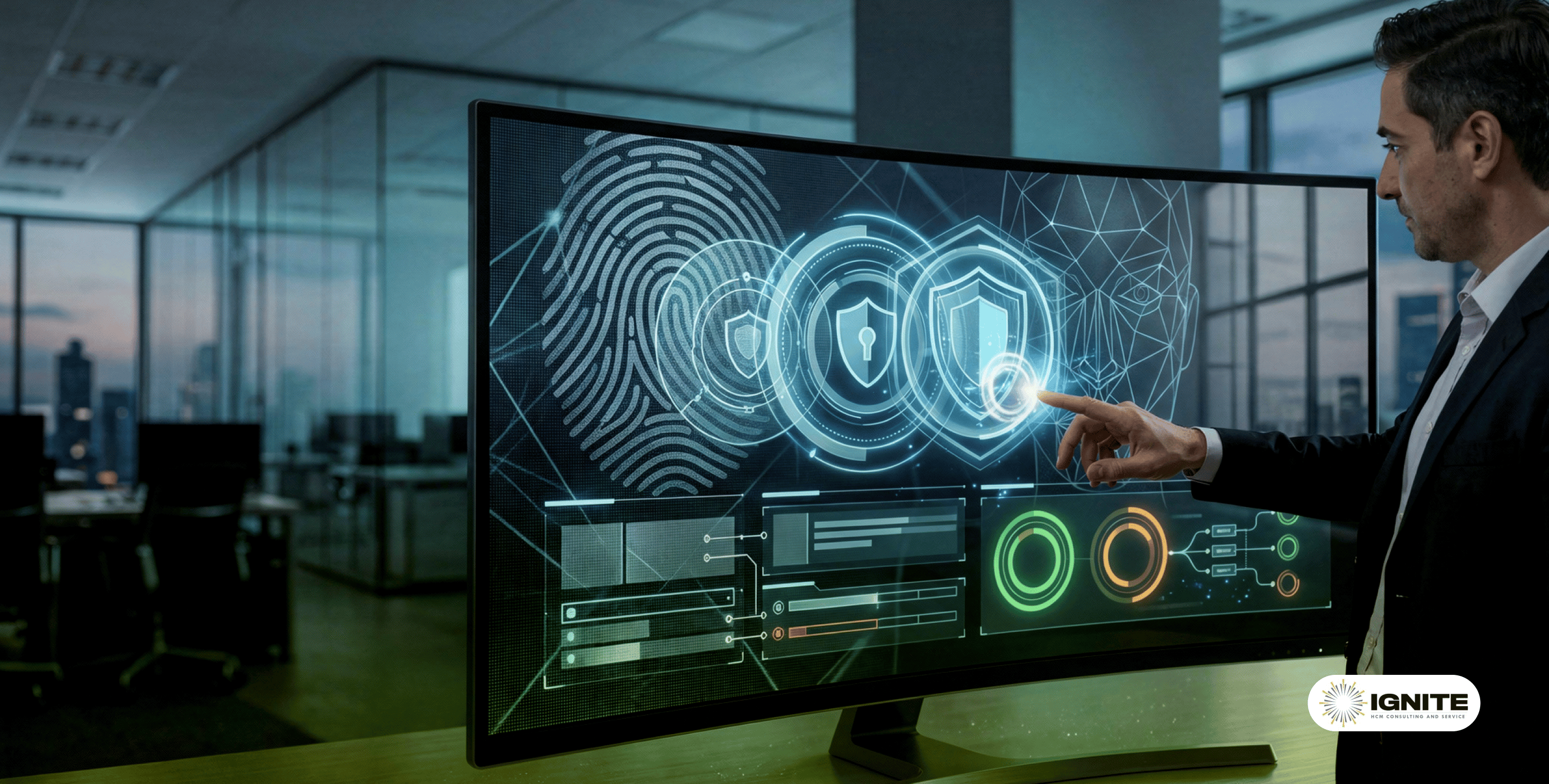
When evaluating whether a biometric time-tracking system respects both security needs and privacy rights, consider this framework:
T - Transparency
Is the organization clear about what data is collected, how it's used, and who has access? Are policies written in plain language that employees can actually understand?
R - Rights
Do individuals have meaningful rights regarding their data? Can they access it, correct it, or request deletion under certain circumstances?
U - Use Limitation
Is the biometric data used strictly for its stated purpose (time-tracking), or could it be repurposed for surveillance, performance monitoring, or other functions?
S - Security
What technical and administrative safeguards protect the data? Is it encrypted? Who has access? How is that access monitored?
T - Time Limits
Are there clear retention and destruction policies? Is data deleted when an employee leaves? Is there a maximum retention period?
Biometric time-tracking isn't inherently good or bad—implementation matters enormously. Here's what ethical, privacy-respecting biometric systems look like in practice:
Employees receive clear information about the system before implementation, have an opportunity to ask questions, and are offered genuine alternatives when possible (even if those alternatives are less convenient).
The system collects only what's necessary for its stated function. If you need to verify identity for time-tracking, you don't need to build a comprehensive surveillance infrastructure.
Some systems store biometric templates directly on a card or fob carried by the employee rather than in a centralized database. This approach significantly reduces breach risk while maintaining functionality.
Encryption, access controls, regular security audits, and breach response plans aren't optional—they're fundamental requirements.
Written policies address retention periods, destruction schedules, who has access, and what happens during employment changes, company sales, or system decommissioning.
Independent verification that the system operates as promised and that policies are being followed.
You have more agency in this conversation than you might think. Here's how to exercise it:
Understanding whether your state has biometric privacy protections gives you concrete ground to stand on when raising concerns.
Before consenting to biometric collection, ask for written policies about data storage, access, retention, and destruction. Legitimate employers should be able to provide clear answers.
Keep copies of any consent forms you sign, privacy policies you receive, and communications about biometric systems.
If you have concerns about implementation, bring them to HR or management. Frame your concerns around both employee wellbeing and legal compliance—the latter often gets more traction.
If you're represented by a union, biometric time-tracking is absolutely a workplace condition that can and should be addressed through collective bargaining. Even without a union, concerns raised by groups of employees often carry more weight.
Here's a thought-provoking question to sit with: What does the rise of biometric time-tracking reveal about the state of workplace trust?
These systems exist, in part, because of a fundamental assumption that employees need to be verified, that their word about when they arrived isn't sufficient, that technological proof is required.
There's a certain irony here. The same technology that can protect employees from wage theft can also communicate a deep institutional distrust of those same employees.
Organizations that implement biometric time-tracking while simultaneously fostering high-trust cultures need to be intentional about this tension. The technology itself is neutral, but how it's framed, implemented, and communicated shapes its impact on workplace wellbeing and morale.
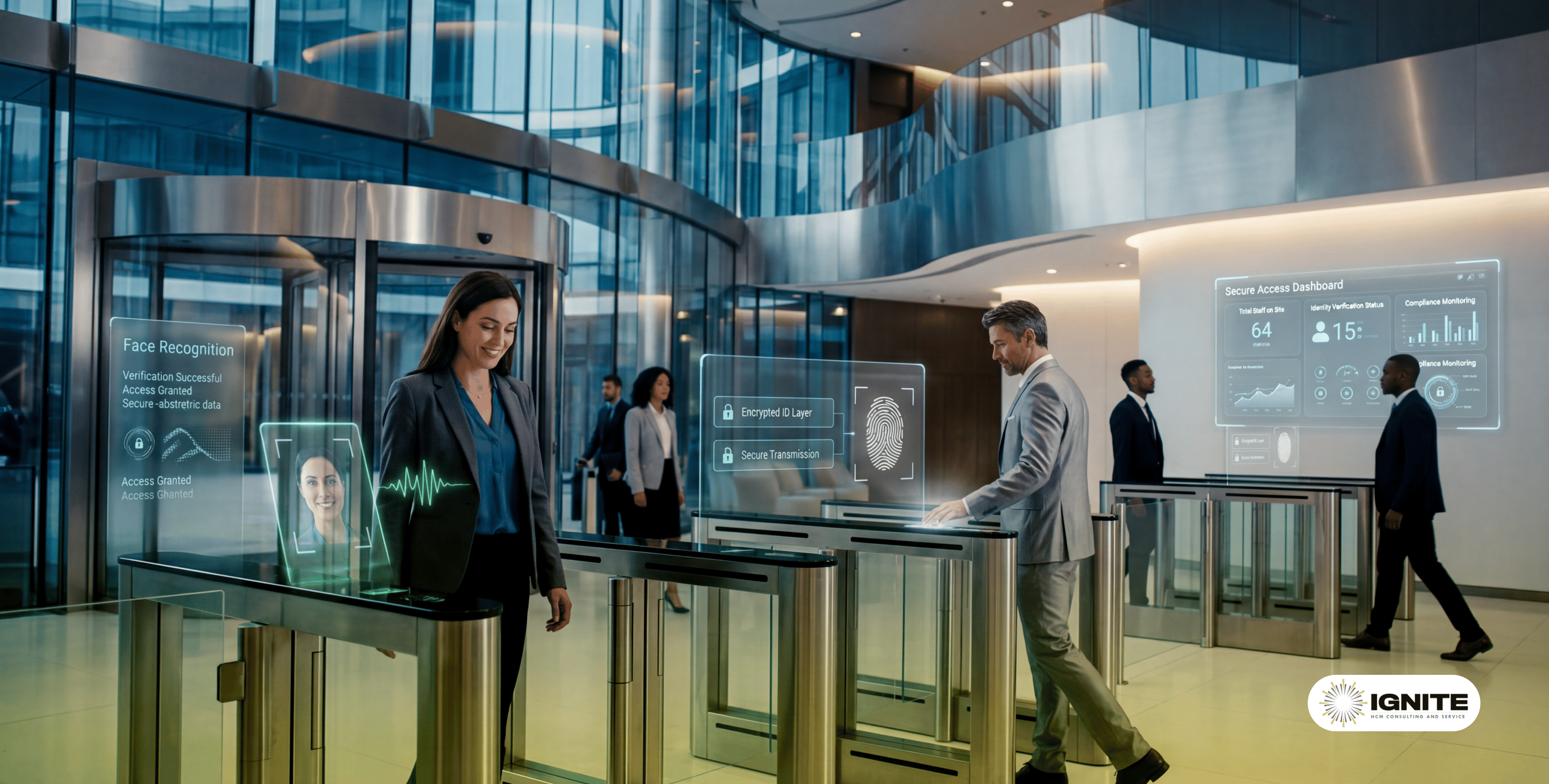
The technology isn't standing still. Here's what's emerging:
Beyond physical characteristics, some systems now analyze behavioral patterns—how you type, how you move your mouse, even how you walk. These "passive" biometrics can provide continuous authentication without requiring active scans.
Combining multiple biometric factors (face + fingerprint, for example) increases accuracy and security but also increases the amount of sensitive data collected.
Machine learning is making biometric systems more accurate, but it's also enabling more sophisticated analysis of the data collected—potentially extending beyond simple identity verification.
Some companies are exploring integration with smartwatches and other wearables for biometric time-tracking, raising additional questions about the boundaries between work and personal devices.
Biometric time-tracking represents a genuine tension between legitimate interests. Employers have real needs for accurate timekeeping and fraud prevention. Employees have real rights to privacy and autonomy over their most personal data.
The goal isn't to eliminate this tension but to navigate it thoughtfully.
That means demanding transparency, insisting on robust security, understanding your legal rights, and participating actively in conversations about how these technologies are implemented in your workplace.
Your fingerprints and facial geometry are uniquely yours—they're part of your biological identity in a way that no password or badge ever could be. How that data is collected, stored, used, and protected matters deeply.
As biometric time-tracking becomes increasingly common, informed employees who understand both the benefits and risks are the best advocates for implementations that respect both security and privacy.
Because ultimately, clocking in shouldn't mean checking your privacy at the door.
Biometric time-tracking offers real advantages in accuracy and convenience, but it also involves collecting uniquely sensitive data that requires serious protections. Understanding the technology, knowing your rights, and asking good questions are your best tools for ensuring these systems serve everyone's interests—not just the bottom line.